What Are the Top Types of Isolation Membranes?

Choosing the right isolation membrane starts with the building’s exposure, not a product label. A basement wall needs water resistance. A roof may need vapor control, air sealing, and ultraviolet stability. A tiled floor may require crack isolation and uncoupling performance.

Industry data shows why this subject matters. The International Energy Agency reports that buildings consume about 30% of global final energy. They also produce roughly 26% of energy-related emissions. These figures strengthen demand for better envelope systems and durable insulation details. Grand View Research describes the waterproofing membranes market as a growing construction segment through 2030. Its analysis highlights polymeric, bituminous, and liquid-applied systems as important product groups.

The main isolation membrane types include bituminous sheets, PVC and TPO membranes, EPDM rubber, HDPE liners, liquid-applied coatings, and uncoupling membranes. Each type behaves differently around joints, penetrations, temperature changes, and substrate movement. A low-cost sheet can appear effective. Poor seam preparation may defeat it within one rainy season.

Building scientist Joseph Lstiburek offers a useful principle: “The perfect wall has all of the control layers outside of the structure.” His statement supports careful membrane placement, though real projects rarely behave perfectly. Climate, workmanship, drainage, and maintenance can change the result.

This guide compares the top isolation membrane options by function, material, installation method, and service conditions. It also examines overlooked weaknesses, including trapped moisture, incompatible adhesives, and weak detailing around pipes. Product selection should follow verified technical data, applicable standards, and project-specific testing. No single membrane wins everywhere. That assumption deserves reconsideration.
What Are the Top Types of Isolation Membranes?

Definition and Purpose of Isolation Membranes

What Are the Top Types of Isolation Membranes?

Definition and Purpose of Isolation Membranes

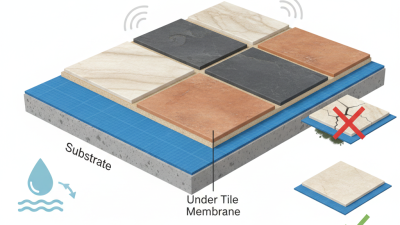
An isolation membrane is a separating layer between materials that should not bond directly. It can manage moisture, movement, vapor, sound, or chemical contact. In building work, common types include sheet-applied uncoupling membranes, liquid-applied elastomeric membranes, and vapor-control membranes. Their purposes overlap, but they are not interchangeable.

Sheet membranes help separate tile assemblies from unstable substrates. Liquid membranes form continuous barriers around corners and penetrations. Vapor-control membranes limit moisture migration through floors, walls, or slabs. The International Energy Agency’s 2023 Global Status Report for Buildings and Construction reports that building operations use about 30% of global final energy. Better moisture control cannot solve every efficiency problem, but it can protect insulation and reduce premature repairs. That connection is often overlooked.

Performance depends on the installation, not only the material. ASTM C836 addresses liquid-applied elastomeric waterproofing membranes, while ISO 12572 evaluates water-vapor properties. These standards test specific behaviors. They do not guarantee success in every climate or assembly. The term “isolation membrane” is also not perfectly standardized. That creates room for confusion.

Tips: Confirm the substrate condition, expected movement, drainage path, and vapor direction before choosing a membrane. Check the technical data sheet and required thickness. Do not cover damp concrete too quickly. A small site test may reveal adhesion problems earlier. My practical caution is simple: a membrane can hide defects, but it cannot repair a weak substrate.
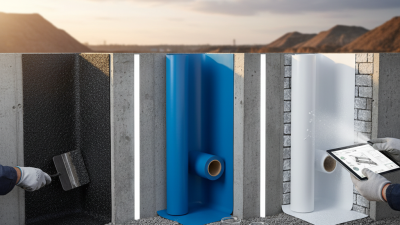
How Isolation Membranes Are Classified

Isolation membranes are classified by material, installation method, and protection function. The main types include sheet-applied, liquid-applied, cementitious, bituminous, and uncoupling membranes. Sheet membranes arrive in rolls and provide consistent thickness across large floors. Liquid membranes form a seamless layer around drains, corners, and irregular surfaces. Cementitious products bond well to mineral substrates, while bituminous membranes suit demanding waterproofing conditions.

Classification also depends on performance. Crack-isolation membranes absorb limited substrate movement before tiles fracture. Waterproofing membranes resist liquid penetration. Uncoupling membranes separate tile surfaces from minor substrate stress. Some products combine these functions, but performance claims require careful testing. Grand View Research estimated the global waterproofing membranes market at about USD 8.1 billion in 2023, with continued growth expected through 2030. That expansion reflects stronger demand for durable building envelopes, yet market growth does not guarantee correct installation.

Tips: Check the substrate moisture, movement, and drainage design before choosing a membrane. Review test standards, thickness, curing time, and movement ratings. A liquid membrane may look easier, but uneven coverage can create weak spots. Sheet systems improve thickness control, though seams need disciplined treatment. This classification is useful, not perfect. Real projects often need hybrid systems, and local climate can change the best choice. When in doubt, compare independent laboratory data with the installation conditions, not just the product label.

Electrical Isolation Membranes for Power Systems

What Are the Top Types of Isolation Membranes?

Electrical Isolation Membranes for Power Systems

In power systems, isolation membranes act as thin dielectric barriers between conductive parts. Common types include mica laminates, polyimide films, ceramic sheets, PTFE films, and silicone-based elastomers. Each material behaves differently under heat, vibration, moisture, and voltage stress. Mica tolerates high temperatures, while polyimide suits flexible, compact assemblies. Ceramics provide strong insulation but may crack under impact or uneven clamping. Fit matters.

Engineers assess dielectric strength, partial-discharge resistance, thermal aging, tracking resistance, and puncture tolerance. The correct choice depends on voltage class, temperature, contamination, and installation pressure. In transformer barriers, a small wrinkle can concentrate the electric field locally. That detail is easy to miss during inspection. In battery and converter assemblies, membranes must also protect creepage paths and vulnerable edges. Clearance matters too. Checks should include thickness mapping, surface cleanliness, compression marks, and insulation-resistance testing.

A high dielectric rating alone can mislead. Inspection teams have seen strong specifications fail after moisture entered a poorly sealed joint. Moisture changes everything. Membrane edges need smooth finishing, secure overlap, and compatible sealing materials. Technical data should be verified against recognized test methods and the actual duty cycle. Engineers should review failure evidence, not laboratory values alone. Installation quality can defeat excellent material selection. That weakness deserves attention before energization.

What Are the Top Types of Isolation Membranes? – Electrical Isolation Membranes for Power Systems
Isolation Type Basic Operating Principle Typical Isolation Barrier or Membrane Common Power-System Applications Typical Isolation Voltage Range* Main Advantages Key Limitations
Galvanic Isolation Separates two electrical circuits so that no direct conductive current path exists between them. Solid dielectric barrier, reinforced insulation, laminated insulation system, or insulated transformer construction. Power supplies, industrial control panels, battery systems, motor drives, measurement circuits, and grid-interface equipment. Approximately 1–10 kVrms, depending on construction Provides strong protection against ground loops, fault-current transfer, and hazardous voltage propagation. Requires careful creepage, clearance, insulation coordination, and thermal design.
Transformer-Based Magnetic Isolation Transfers energy through a magnetic field while an insulation system separates the primary and secondary windings. Enamelled wire insulation, interlayer insulation, bobbin barriers, tape systems, and reinforced winding insulation. AC-DC power supplies, isolation transformers, auxiliary power units, gate-drive supplies, and medium-voltage control systems. Approximately 1–15 kVrms dielectric withstand Supports power transfer and voltage conversion while maintaining electrical separation. Can be bulky; leakage inductance, parasitic capacitance, losses, and magnetic saturation must be managed.
Capacitive Isolation Uses displacement current through a controlled dielectric while blocking direct DC conduction. Thin-film, ceramic, polymer, or multilayer dielectric capacitor barrier. Isolated digital communication, isolated gate control, signal transmission, and compact power-conversion circuits. Approximately 1–15 kVrms dielectric withstand Compact construction, high switching speed, low power consumption, and good integration with electronic circuits. Common-mode transient immunity, insulation aging, parasitic capacitance, and electromagnetic interference require attention.
Optical Isolation Converts an electrical signal into light and then back into an electrical signal across a nonconductive gap. Light-emitting semiconductor, optical path, insulating encapsulant, and photodetector barrier. Control feedback, protection circuits, gate-drive interfaces, industrial automation, and low-power signal isolation. Approximately 2.5–10 kVrms dielectric withstand Very low direct coupling between circuits and effective separation of signal grounds. Propagation delay, temperature-dependent transfer characteristics, aging, and limited power-transfer capability.
Solid Polymer Insulation Uses a continuous polymer layer to prevent electrical breakdown between conductive parts. Polyimide, polyester, epoxy, silicone, polyethylene, polypropylene, or fluoropolymer film and encapsulation. Busbars, cable systems, power modules, printed circuit assemblies, switchgear, and high-voltage components. Material- and thickness-dependent; commonly 1–20 kV/mm dielectric strength Flexible processing, good dielectric strength, lightweight construction, and suitability for complex geometries. Performance can be affected by temperature, moisture, partial discharge, mechanical stress, and long-term aging.
Ceramic Isolation Uses a dense inorganic dielectric with high electrical strength and thermal stability. Alumina, aluminum nitride, steatite, or other electrical-grade ceramic substrate or barrier. Power modules, high-temperature electronics, feedthroughs, sensors, and high-voltage assemblies. Approximately 5–30 kV/mm dielectric strength Excellent thermal stability, high insulation resistance, low moisture absorption, and strong resistance to fire. Brittleness, lower tolerance to mechanical shock, and higher processing cost than many polymer systems.
Glass or Hermetic Isolation Creates a sealed insulating barrier that separates conductors while limiting moisture and gas ingress. Glass-to-metal seal, fused glass, or sealed insulating feedthrough structure. High-reliability feedthroughs, vacuum equipment, harsh-environment sensors, high-voltage instrumentation, and energy-storage systems. Application-specific; commonly 1–20 kVrms dielectric withstand Excellent environmental sealing, low moisture permeability, and long-term stability in demanding conditions. Rigid construction, thermal-expansion matching requirements, and limited mechanical flexibility.
Gas-Insulated Isolation Uses an insulating gas or controlled gas space to withstand voltage between separated conductors. Pressurized gas chamber, insulated enclosure, and solid spacers or barriers. Compact switchgear, substations, bus ducts, high-voltage disconnectors, and power-distribution equipment. From several kilovolts to hundreds of kilovolts, depending on system design High dielectric strength, compact spacing, and reduced exposure to contamination when properly sealed. Requires pressure control, leak monitoring, specialized servicing, and careful environmental management.
Air-Insulated Isolation Maintains electrical separation through air gaps and physical spacing between energized and grounded parts. Clearance distance, insulating supports, barriers, and ventilated enclosures. Low- and medium-voltage switchboards, open busbars, distribution panels, and laboratory power equipment. Determined primarily by clearance, altitude, pollution level, and overvoltage category Simple construction, easy inspection, low material cost, and straightforward maintenance. Requires more physical space and is more sensitive to humidity, dust, pollution, altitude, and surface contamination.
Magnetic Shielding Membrane Reduces unwanted electromagnetic coupling by redirecting or absorbing magnetic fields around an isolation barrier. High-permeability metal foil, conductive shield, laminated magnetic material, or composite shielding layer. Transformers, current sensors, power converters, precision measurement equipment, and sensitive control systems. Not normally specified as a dielectric isolation rating Reduces electromagnetic interference and improves measurement accuracy and control-signal integrity. Does not replace required dielectric insulation; shielding effectiveness depends on frequency, geometry, grounding, and material properties.
*Voltage ranges are representative engineering values rather than universal limits. Actual performance depends on insulation material, thickness, creepage and clearance distances, temperature, humidity, altitude, pollution degree, partial-discharge requirements, test duration, and the applicable safety standard.

Thermal and Acoustic Isolation Membranes

Thermal and Acoustic Isolation Membranes

Thermal and acoustic isolation membranes solve different problems, but good assemblies often need both. Reflective membranes reduce radiant heat transfer when an air gap remains beside the foil surface. Aerogel-based membranes provide high thermal resistance where wall depth is limited. Dense polymer membranes add mass and help reduce airborne speech, traffic, and equipment noise. Mineral-fiber layers can improve absorption inside wall or ceiling cavities. The International Energy Agency reports that buildings consume about 30% of global final energy. Better envelope design can therefore reduce heating and cooling demand. It is not only a comfort issue.

Acoustic performance depends on the complete system. ISO 10140 measures laboratory sound insulation, while ISO 717-1 provides rating methods. The World Health Organization recommends keeping night noise below 40 dB outside bedrooms in its 2018 environmental noise guidance. Seams, service penetrations, and rigid connections can weaken a well-rated membrane. I have seen small gaps create noticeable drafts and sound leakage. Membranes are not magic. Installation quality remains the weak point.

Tips: Match the membrane to the risk. Use thermal calculations for heat flow, and tested acoustic data for noise control. Keep foil surfaces facing an air space. Seal overlaps carefully with compatible tapes. Avoid compressing resilient layers. Check corners and pipe openings twice. A product with impressive laboratory data may perform poorly on a rushed site. That lesson deserves more attention.

Chemical and Moisture-Resistant Isolation Membranes

What Are the Top Types of Isolation Membranes?

Chemical and moisture-resistant isolation membranes protect structures from water vapor, liquid moisture, and aggressive substances. Common types include polymeric sheets, elastomeric coatings, and multilayer composite films. Each type behaves differently under pressure, heat, and chemical exposure.

The 2023 Global Status Report for Buildings and Construction reports that buildings create about 37% of global energy and process-related emissions. Poor moisture control can worsen insulation performance and accelerate material damage. A properly selected membrane helps maintain dry assemblies around basements, roofs, tanks, and industrial floors. In practice, installers should inspect overlaps, corners, and penetrations carefully. Small gaps often become serious leak paths.

Chemical resistance requires more than a strong thickness rating. Engineers should review the actual chemical, concentration, temperature, and exposure time. Useful testing may include water vapor transmission, hydrostatic pressure, tensile strength, and immersion compatibility. ASTM E96 and ISO 175 can support laboratory comparisons, but they cannot replace site-specific evaluation. The 2023 United Nations World Water Development Report highlights growing water stress across many regions. This makes moisture management increasingly important, especially where repairs are difficult. Still, membrane specifications are sometimes copied without checking real exposure conditions. That approach needs reconsideration.

Resources

Copyright © CUSTOM Building Products 2025
Products | Resources | Interactive Tools | Warranties | Privacy Policy | Terms of Use | Technical Training