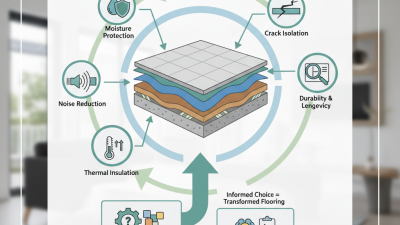
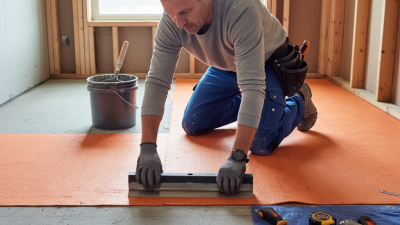
Choosing the right tile membrane can determine whether a tiled surface remains stable or develops costly failures. Global buyers often compare waterproofing sheets, liquid-applied membranes, uncoupling layers, and crack-isolation products. Each type serves a different installation condition.
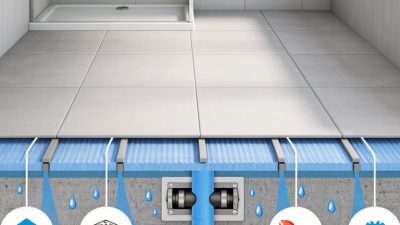
A bathroom floor may need continuous waterproof protection around drains, corners, and wall joints. A balcony faces sunlight, temperature changes, and repeated moisture exposure. Large-format tiles may require stronger movement management than small ceramic tiles. The best tile membrane depends on substrate condition, tile size, installation method, and local building requirements.
No single membrane fits every project. That matters.
This guide examines the leading tile membrane types for international purchasing decisions in 2026. It considers material structure, flexibility, thickness, installation time, drainage details, and compatibility with common adhesives. Experienced installers know that product data sheets are only part of the decision. Surface preparation, seam treatment, curing time, and workmanship can change the result dramatically.
Some buyers focus heavily on price per square meter. That approach can overlook labor, waste, shipping conditions, and replacement costs. A low-cost membrane may become expensive when difficult corners require extra detailing. I have also seen specifications appear convincing while practical installation remains unclear. Buyers should verify test reports, manufacturer instructions, technical support, and regional certifications before ordering.
The sections ahead provide a practical comparison for distributors, contractors, architects, and procurement teams. They aim to support careful choices, not promote one universal solution. Regional climate and standards still deserve close review.
2026 Best Tile Membrane Types for Global Buyers
Tile Membrane Fundamentals: Waterproofing, Crack Isolation, and Load Ratings
Tile membranes manage three different risks: water entry, substrate movement, and service loads. They are not interchangeable. ANSI A118.10 evaluates waterproofing membranes, while ANSI A118.12 addresses crack-isolation performance. Buyers should request the complete test classification, not just the word “waterproof.”
The 2024 TCNA Handbook commonly references L/360 maximum deflection for ceramic tile substrates and L/720 for stone installations. That distinction matters under heavy furniture, rolling equipment, or large-format stone. A membrane cannot correct an undersized joist or unstable concrete slab. It follows the substrate. Sometimes, that is the uncomfortable truth.
For load questions, review the Robinson Floor Test under ASTM C627. The test evaluates the installed floor assembly through repeated loading cycles, rather than assigning a universal load rating to one membrane. Check tile size, adhesive coverage, substrate type, joint design, and movement accommodation together. In wet rooms, EN 14891 test documentation may also support water-impermeability claims for bonded waterproofing products.
On site, corners and pipe penetrations remain common failure points. Use compatible reinforcing components, maintain specified overlaps, and avoid puncturing the waterproof layer unnecessarily. Crack isolation also has limits. Existing movement, structural settlement, and control joints still require proper detailing. Global buyers should compare test methods, installation temperatures, cure times, and regional standards. A certificate without those details can create false confidence.
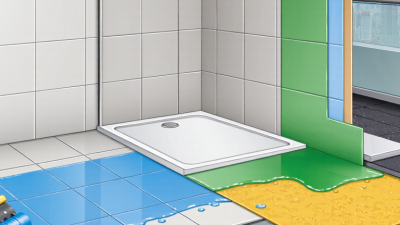
Global tile buyers should compare test scope, not just the word waterproof. ANSI A118.10 covers load-bearing, bonded waterproof membranes beneath ceramic and stone tile. It suits showers, balconies, and wet rooms. ANSI A118.12 focuses on crack isolation. It measures how a membrane handles substrate movement, often at low temperatures.
The difference matters on site. A118.10 may stop water migration, but it does not automatically provide crack protection. A118.12 may bridge cracks, yet it is not a complete waterproofing approval. EN 14891 evaluates liquid-applied water-impermeable products under bonded tiles. Its classifications, including CM, DM, and RM, help buyers compare cementitious, dispersion, and reactive-resin systems. ISO 13007-5 also addresses liquid-applied waterproofing products, but its test language and conformity approach are not identical to EN 14891. Do not treat them as interchangeable.
Market pressure makes this decision less theoretical. The 2024 TCNA Market Report recorded about 3.1 billion square feet of tile consumption in the United States during 2023, despite an annual decline of roughly 8.8%. Large volumes create many installation conditions, from dry interiors to freeze-thaw balconies. Membrane choice should follow exposure, movement, drainage, and installer practice. A product can pass a laboratory test and still fail over dusty concrete or poorly treated joints. That is the uncomfortable part. Buyers should request full test reports, declared thickness, curing limits, and substrate requirements before comparing prices. Industry forecasts from Grand View Research also indicate continuing growth in construction waterproofing demand, but forecast growth does not remove specification risk.
For global tile buyers, membrane performance should be judged by test conditions, not attractive datasheets. EN 14891 requires waterproofing products to resist water pressure, commonly 1.5 bar for seven days. A practical 24-hour flood test remains useful on site. Fill the shower area, mark the waterline, and inspect the ceiling below. Small drops matter.
Crack bridging is equally important in concrete buildings. EN 14891 reports a baseline crack-bridging class around 0.75 millimeters under standard conditions. Higher-performance systems may reach 1.5 millimeters, often after temperature cycling. ASTM C836 and related elastomeric coating methods also examine elongation and recovery. These results are not interchangeable. A membrane can stretch well yet fail at corners.
Shear strength needs careful interpretation. ASTM C482 sets a widely recognized 0.34 MPa, or 50 psi, bond benchmark for many bonded tile assemblies. However, the weak point may be the tile adhesive, membrane surface, or substrate. Independent laboratory reports should identify every layer and test age. Ask for wet-condition results, not only dry values. A 24-hour flood test can reveal pinholes, but it cannot predict years of movement. That limitation deserves more attention. Contact with dusty concrete can reduce adhesion sharply, even when the membrane itself performs well.
Performance comparison based on 24-hour flood-test practice, crack-bridging capacity, and shear-bond strength.
Sheet and liquid-applied membranes generally provide stronger crack-bridging performance, while cementitious systems offer dependable waterproofing with simpler mineral compatibility. The 24-hour flood-test result is shown as a pass-rate benchmark; crack bridging is measured in millimetres, and shear strength in MPa. Reference criteria commonly used in international specifications include EN 14891 water-tightness, crack-bridging, and adhesion requirements. Always confirm the exact product technical data and local installation standard before purchasing.
2026 Best Tile Membrane Types for Global Buyers
Global tile demand keeps expanding. The U.S. Census Bureau recorded approximately $2.15 trillion in construction spending during 2024. That scale increases the need for dependable waterproofing, not just attractive tile finishes. Buyers should compare membrane type, substrate condition, local climate, installation labor, and replacement access.
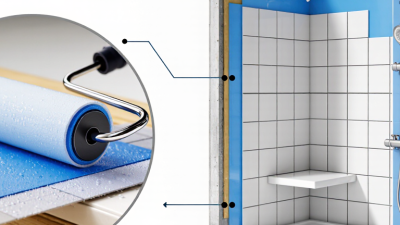
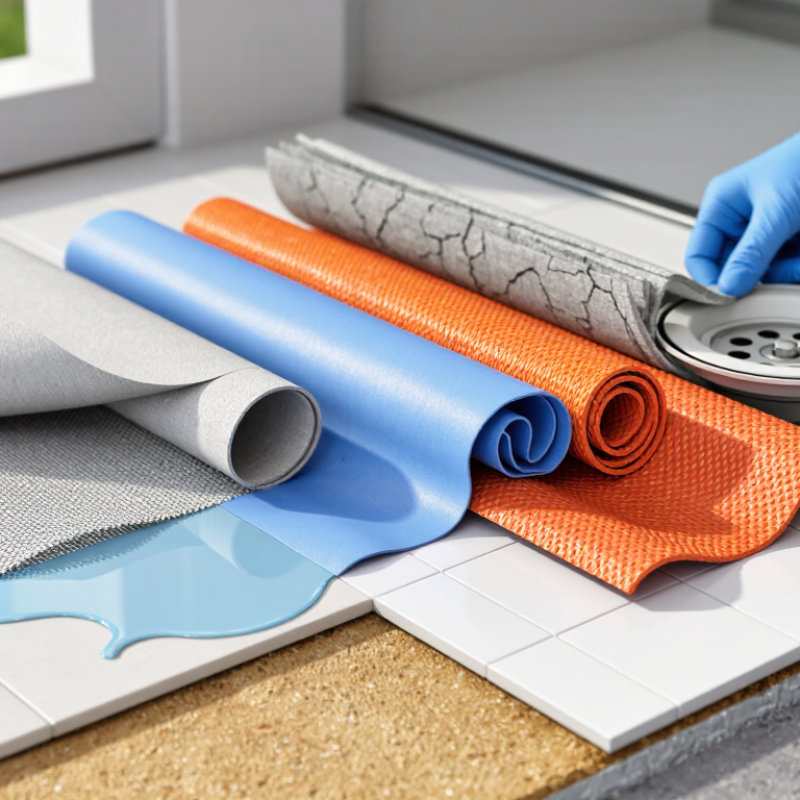
Sheet membranes offer consistent thickness and fast coverage. They suit bathrooms, balconies, and projects requiring predictable quality control. Liquid membranes fit irregular corners and complex penetrations, but coverage depends heavily on applicator discipline. A thin application can create a serious weak point. Uncoupling membranes help manage minor substrate movement and reduce stress transfer beneath tile. However, they cannot correct unstable framing or poorly prepared concrete. Foam membranes add low weight and convenient shaping, especially around benches and shower walls. Their compressive performance still requires careful review.
Independent test data matters. ANSI A118.10 sets performance requirements for bonded waterproof membranes, while ASTM C627 evaluates tiled assemblies through repeated loading cycles. The Tile Council’s 2024 technical guidance also emphasizes movement joints, drainage, and substrate preparation. These details often decide long-term performance. I would not claim one membrane wins every project. A liquid system may be economical on a simple floor, while a sheet system provides better control on a demanding commercial wall. Verify coverage rates, curing conditions, fire documentation, and regional compliance before ordering.
| Membrane Type | Typical Form and Thickness | Primary Function | Best-Fit Applications | Main Advantages | Key Limitations | Installation Requirements | Buyer Selection Priorities |
|---|---|---|---|---|---|---|---|
|
Sheet Waterproofing Preformed sheet membrane |
Flexible rolls or sheets, commonly about 0.4–1.5 mm thick. Available in different widths and roll lengths depending on the product system. | Creates a continuous waterproof layer beneath tile and helps protect the substrate from water penetration. | Bathrooms, shower walls and floors, wet rooms, balconies, terraces, countertops, and other areas requiring reliable surface waterproofing. | Consistent factory-controlled thickness; fast coverage on large areas; immediate visual inspection of seams and overlaps; suitable for many interior and exterior tile assemblies. | Seams, corners, penetrations, and changes of plane require careful detailing. The substrate must be sufficiently flat because the sheet does not compensate for major irregularities. | Use the specified compatible mortar or adhesive. Fully embed the sheet without wrinkles or voids, and treat seams, corners, drains, and pipe penetrations with approved accessories. | Check sheet thickness, roll dimensions, seam method, drain compatibility, temperature range, UV exposure requirements, and tested waterproofing performance. |
|
Liquid-Applied Waterproofing Brush, roller, or trowel applied |
Applied as a liquid coating in multiple passes. The cured dry-film thickness is product-specific and must be confirmed from the technical data sheet. | Forms a continuous waterproof coating that can cover irregular shapes and complex transitions with fewer physical seams. | Shower areas, bathrooms, niches, corners, curved surfaces, small repair zones, and projects where cutting and fitting sheet material would be difficult. | Easy to shape around penetrations and awkward geometry; convenient for small or detailed areas; can provide seamless coverage when applied at the required thickness. | Coverage rate and final thickness depend heavily on application quality. Insufficient drying time, pinholes, pooling, or uneven coating can reduce performance. | Apply to a clean, dry, sound, and properly prepared substrate. Use a wet-film gauge where required, respect recoat and curing times, and reinforce corners, joints, and penetrations according to the system instructions. | Compare required coats, coverage per unit area, minimum cured thickness, drying time, substrate moisture limits, temperature limits, and compatibility with the selected tile adhesive. |
|
Uncoupling Membrane Often sheet or mat format |
Commonly supplied as a thin profiled sheet or composite mat, frequently around 3–6 mm thick. Exact thickness varies by profile and construction. | Reduces the transfer of certain in-plane stresses between the substrate and tile assembly. Some products also provide waterproofing, vapor management, or drainage functions when specifically designed and detailed for those purposes. | Ceramic or porcelain tile over concrete or wood-based substrates; renovation projects; areas exposed to substrate movement, shrinkage, or differing expansion behavior. | Helps manage stress in the tile assembly; can improve renovation flexibility; some systems offer integrated channels for drainage or heating-cable installation. | It is not automatically a structural repair or substitute for movement joints. Not every uncoupling product is waterproof, and performance depends on correct bonding and substrate preparation. | Install with the mortar type and trowel specified for the membrane. Ensure full contact, avoid trapped air, follow directional or seam requirements, and preserve perimeter and field movement joints. | Determine whether the project needs uncoupling only or uncoupling plus waterproofing. Review load limits, approved substrates, tile-size restrictions, seam treatment, movement-joint guidance, and heating-system compatibility. |
|
Foam Backerboard / Foam Membrane Rigid or semi-rigid closed-cell board |
Lightweight boards are commonly available in approximately 6–50 mm thicknesses, with thinner panels for waterproofing and thicker panels for insulation or build-up correction. | Provides a tile-ready waterproof backing; thicker boards may also provide thermal insulation and limited build-up adjustment. | Shower walls, bathtub surrounds, wet-room walls, countertops, benches, niches, partition walls, and lightweight construction where reduced dead load is useful. | Low weight; easy cutting; consistent dimensions; combines backing and waterproofing functions in many systems; thicker panels can improve thermal performance. | Boards require correct fastening, joint treatment, and edge detailing. They are not a replacement for structural framing, and unsupported areas may need additional support depending on tile and board specifications. | Install over suitable framing or substrate using approved fasteners, washers, adhesives, or mortars. Seal board joints, fastener penetrations, corners, and transitions with compatible system components. | Check compressive strength, board thickness, maximum unsupported span, fastening schedule, tile-size and weight limits, water-exposure rating, fire requirements, and thermal-performance data. |
Buyer note: Thicknesses, coverage rates, curing times, allowable substrates, load limits, and waterproofing classifications vary by product and regional standard. Always verify the current technical data sheet, installation instructions, and applicable local building requirements before purchase or installation.
Moisture compliance should begin with measured substrate conditions, not product labels. ASTM F2170 commonly uses 75% relative humidity as a project control point, but adhesive and membrane instructions may require less. A reliable installer records test depth, temperature, and curing time. Small details matter. The 2024 TCNA Handbook also stresses substrate preparation before waterproofing, especially around drains, corners, and movement joints.
Fire classification varies sharply by region. Under EN 13501-1, Class A1 and A2 indicate limited combustibility, while Class B allows higher reaction-to-fire performance. ASTM E84 uses flame-spread and smoke-developed indexes; Class A generally means flame spread from 0 to 25. However, a membrane should not claim a wall-system rating without a tested assembly. That mistake remains common. Buyers should request laboratory reports, thickness data, and installation conditions.
Waterproofing performance also needs regional alignment. ANSI A118.10 covers load-bearing, bonded waterproof membranes for tile installations in North America. Europe commonly references EN 14891 for liquid-applied products beneath ceramic finishes. Australia may require AS 4654.1 and AS 4654.2 for external-use waterproofing systems. These standards are not interchangeable. A certificate from one market may provide useful evidence, but it may not satisfy another authority. Project teams should verify local acceptance before shipment, because paperwork alone cannot correct poor detailing or an untested fire assembly.
Copyright © CUSTOM Building Products 2025
Products | Resources | Interactive Tools | Warranties | Privacy Policy | Terms of Use | Technical Training