How Does a Wire Mesh Weaving Machine Work and Its Benefits?
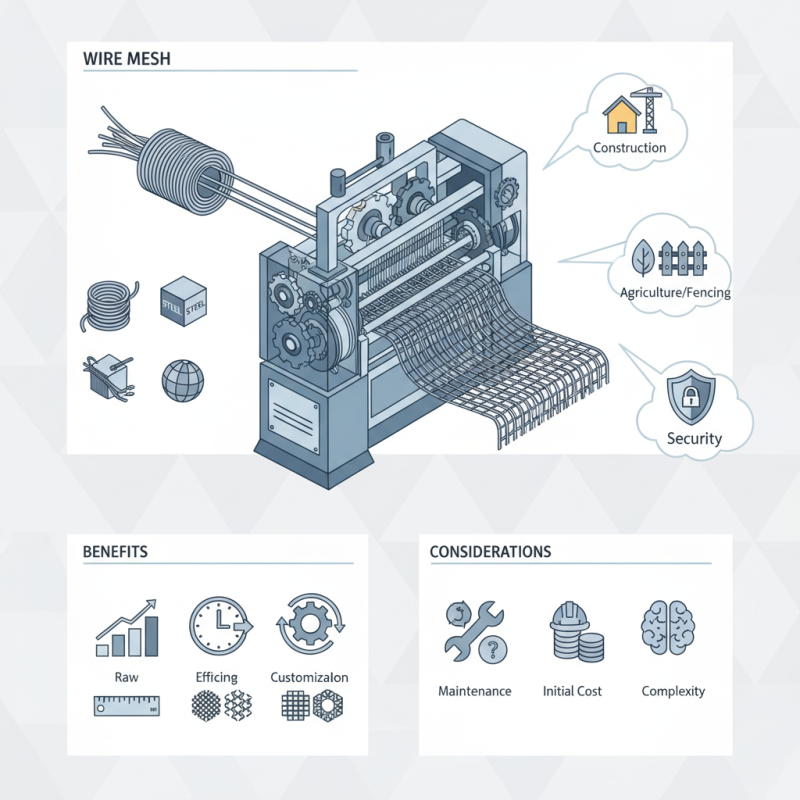
The wire mesh weaving machine brings innovation to industrial processes. This machine efficiently weaves metal wires into various mesh types. It is essential in construction, agriculture, and security applications. Many industries rely on this technology for durability and strength.
Understanding how a wire mesh weaving machine operates reveals its benefits. These machines transform raw materials into precise, strong mesh products. They minimize labor and increase production speed. Users can also customize mesh size and pattern based on specific needs.
Despite its advantages, some may find the operation complex. Maintenance can be challenging, requiring skilled personnel. Additionally, high initial costs might deter small businesses. However, the long-term benefits often outweigh these concerns. Investing in a wire mesh weaving machine can lead to significant productivity gains.
Overview of Wire Mesh Weaving Machines
Wire mesh weaving machines play a vital role in various industries. They create sturdy and versatile products used in construction, agriculture, and safety. Understanding their functionality can help businesses optimize their production processes.
These machines operate by interlacing wires to form a mesh. The weaving process involves techniques like plain weave or twill weave. The choice of weave affects the finished product's strength and flexibility. Users should carefully select the appropriate technique based on their requirements.
Tip: Regular maintenance can prevent operational hiccups. Clean the machine frequently to avoid wire jams. Keep spare parts handy for quick replacements when necessary.
Wire mesh weaving machines vary in complexity. Some are fully automated, while others require manual input. This variation impacts production rates and costs. Investing in a machine that suits your needs is crucial but can be challenging. Analyzing your production volume and product types will help guide this decision.
Tip: Don’t underestimate the learning curve. Training staff on machine operation is essential. A knowledgeable team enhances efficiency and reduces errors. Embrace the learning process for better results.
Wire Mesh Weaving Machine Production Capacities
This chart illustrates the production capacities of different types of wire mesh weaving machines, categorizing them into small, medium, large, and industrial scales. As the scale increases, the production capacity significantly improves, demonstrating the efficiency and scalability of modern weaving technology.
The Weaving Process: Step-by-Step Explanation
The weaving process of a wire mesh weaving machine is fascinating. It begins with a roll of wire, which is fed into the machine. The tension must be precise; otherwise, the mesh might be too loose or too tight. As the wire enters, it is straightened and cut into specific lengths. This step requires attention to detail.
Next, the machine weaves the wire into a mesh pattern. The mechanism uses a series of combs that lift and lower the wires, creating the desired openings. The speed at which the machine operates can sometimes lead to errors, such as uneven spacing or tangled wires. Regular maintenance helps prevent these issues, but mistakes can still happen.
Finally, the completed mesh is cut and rolled. Visual inspection is essential at this stage. Any defects may affect the quality of the final product. While wire mesh weaving machines offer efficiency, they also require careful monitoring. The balance between speed and precision is crucial, and finding that balance can be a challenging task.
Types of Wire Mesh Weaving Machines and Their Functions
Wire mesh weaving machines are diverse tools used in various industries. There are several types, each serving different functions. The most common types include flat weaving machines, 3D weaving machines, and rapier weaving machines. Flat weaving machines create two-dimensional meshes. They are widely employed in construction and protective fencing. The 3D weaving machine adds depth, crafting intricate designs. These are significant in architectural elements.
Rapier weaving machines offer speed and efficiency. They weave wire into complex patterns and are vital for decorative purposes. Each machine type has distinct advantages. Yet, they all face challenges such as maintenance and operational costs. Knowing the appropriate type is crucial for effective applications. Choosing the right machine can be daunting, requiring careful thought and strategy. Failure to consider specific needs may lead to inefficiencies and increased expenses.
Key Benefits of Using Wire Mesh Weaving Machines
Wire mesh weaving machines play a vital role in manufacturing. They create strong, durable wire mesh used in various industries. The precise weaving process allows for consistent quality and size. Each machine can produce different mesh patterns, offering versatility for specific needs.
One key benefit is efficiency. These machines reduce manual labor. Workers can focus on monitoring the process, leading to quicker production times. The automatic features minimize errors, ensuring high quality. Additionally, the machines use different types of wire, allowing for diverse applications.
Cost-effectiveness is another advantage. While the initial investment may be high, long-term savings are noticeable. Reduced labor costs and increased production rates improve profitability. However, maintenance can be a challenge. Regular upkeep is necessary to avoid breakdowns. Ignoring this aspect can lead to costly repairs. Embracing technology is beneficial, but keeping a human touch in monitoring is essential.
Applications of Wire Mesh in Various Industries
Wire mesh finds its way into diverse industries, serving many functions. In construction, it reinforces concrete structures. This helps enhance stability and durability. The mesh distributes weight evenly, reducing the risk of cracking. It is vital in making strong and resilient buildings.
In agriculture, wire mesh is used for fencing. Farmers protect crops and livestock from predators. It ensures that the animals stay where they should be. Additionally, mesh is crucial in aquaculture for fish farming. It allows water circulation while keeping fish contained.
Tip: When choosing wire mesh, consider the gauge and material based on your specific needs.
In the automotive industry, wire mesh contributes to filtration systems. It helps maintain engine efficiency by trapping debris. This keeps vehicles running smoothly. The intricate weave can be customized for different applications, enhancing performance.
Tip: Regular maintenance of wire mesh components ensures longevity and efficiency.
In the landscaping sector, wire mesh supports erosion control and plant growth. It provides a sturdy framework for climbing plants. This aesthetic appeal is often overlooked but enhances the garden's beauty. Reflect on how materials often serve dual purposes; their benefits extend beyond the obvious.