What Is a Waterproofing Membrane and How Does It Work?
A waterproofing membrane is a protective layer that helps stop water from entering roofs, foundations, balconies, and wet rooms. It may be made from bitumen, PVC, TPO, EPDM, polyurethane, or cement-based compounds. Each material reacts differently to sunlight, movement, temperature changes, and chemical exposure. Choosing the right system requires more than checking its thickness.
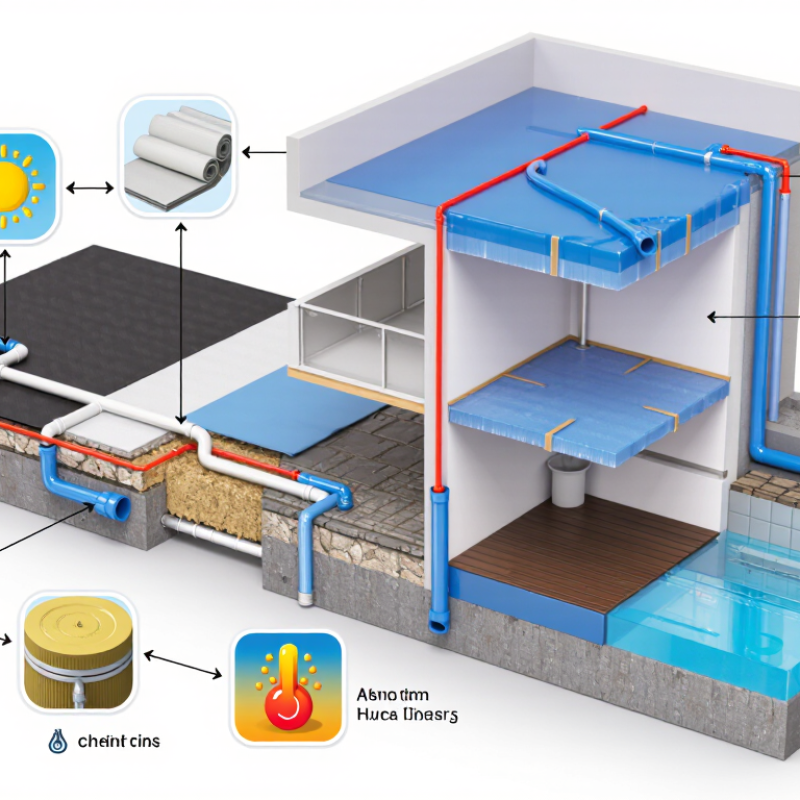
In practice, the membrane works by creating a continuous barrier across vulnerable surfaces. Seams are bonded, welded, or sealed, while edges connect to drains, walls, and pipe penetrations. A small gap around a pipe can become a serious leak after repeated rain. On a basement wall, poor surface preparation may trap dust beneath the membrane and weaken adhesion. These details often decide whether a system performs for years or fails within one season.
Installation conditions matter as much as product quality. The substrate should be stable, clean, and suitable for the selected membrane. Manufacturers’ technical data sheets provide essential limits for temperature, curing time, overlap width, and drainage design. Experienced contractors also inspect corners and joints carefully, because flat areas are rarely the main problem. Still, no waterproofing membrane is completely invincible. Unexpected movement, construction damage, or blocked drainage can defeat a well-designed system. That limitation deserves attention. Understanding how membranes work helps property owners ask better questions, compare reliable specifications, and plan inspections before moisture causes hidden damage.
Waterproofing Membranes Defined: Materials, Forms, and Primary Uses
What Is a Waterproofing Membrane and How Does It Work?
Waterproofing Membranes Defined: Materials, Forms, and Primary Uses
A waterproofing membrane is a continuous barrier that blocks liquid water from entering a building. It usually sits beneath roofs, foundations, terraces, balconies, or wet-room finishes. The material must resist water pressure, movement, punctures, and temperature changes.
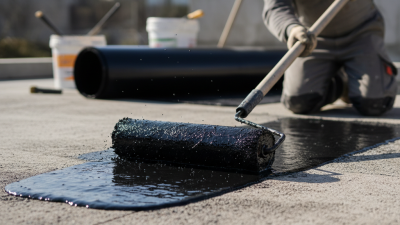
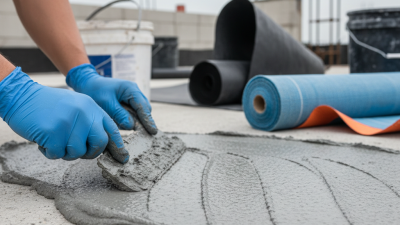
Common sheet membranes include modified bitumen, PVC, TPO, and EPDM. They arrive in rolls, then installers overlap and seal the joints. Liquid-applied membranes use polyurethane, acrylic, or cement-based compounds. Workers brush, roll, or spray them across the surface. After curing, the coating forms a seamless layer around pipes and corners. These areas often fail first.
Grand View Research valued the global waterproofing membranes market at about USD 12.7 billion in 2023. Its analysis also forecasts steady growth through 2030. This demand reflects wider construction activity and stricter moisture-control expectations. However, market figures vary by product definition and region. They should not replace a project-specific assessment.
Tips: Check the substrate moisture, slope, and surface cleanliness before installation. A membrane cannot correct standing water or unstable concrete. Follow the manufacturer’s tested thickness and joint details. Field inspection matters. I have seen a visually smooth coating fail because one drain connection remained poorly sealed. Drainage layers, protection boards, and compatible adhesives can extend service life. Still, no membrane is maintenance-free. Regular inspections should look for cracks, blisters, exposed edges, and blocked outlets.
Waterproofing Membranes: Common Forms and Primary Uses
This chart shows whether each membrane form is commonly used for selected waterproofing applications. A value of 1 indicates a common application, while 0 indicates that the use is not typically associated with that membrane form. Actual suitability depends on the substrate, exposure, movement, drainage conditions, and project specifications.
How Membranes Resist Hydrostatic Pressure and Vapor Diffusion
What Is a Waterproofing Membrane and How Does It Work?
A waterproofing membrane is a continuous layer that blocks liquid water from entering a building assembly. Its performance depends on more than thickness. Hydrostatic pressure increases as groundwater rises against a basement wall or slab. Water then searches for weak points, including joints, cracks, penetrations, and poorly sealed edges. A reliable membrane resists this pressure through tensile strength, adhesion, flexibility, and careful detailing. Drainage also matters. Without pressure relief, even a well-installed membrane may face excessive stress. Small defects matter.
Water vapor behaves differently from liquid water. It moves from areas with higher vapor pressure toward areas with lower vapor pressure. A membrane with low vapor permeance can slow this movement significantly. However, vapor resistance must match the wall assembly and indoor climate. Trapped moisture may cause blistering, odor, corrosion, or gradual material decay. This is often overlooked. On site, inspectors commonly check seams, corners, fastener points, and transitions between materials. A practical concern is temperature. A cold concrete wall can collect condensation even when bulk water is absent. That detail deserves careful review.
Tips
Clean and dry the substrate before installation. Remove dust, oil, loose concrete, and sharp projections. Check the membrane’s permeance rating against the complete assembly. Seal every penetration with compatible detailing materials. Inspect overlaps before backfilling. A small unsealed corner can defeat a large surface area. Water testing can reveal problems, but it cannot replace visual inspection. Some designs still fail because drainage was treated as optional.
What Is a Waterproofing Membrane and How Does It Work?
How Membranes Resist Hydrostatic Pressure and Vapor Diffusion
| Membrane Type |
Typical Composition |
Common Thickness |
Hydrostatic Resistance |
Vapor Permeance |
Typical Applications |
| Sheet-applied rubberized asphalt |
Rubberized asphalt with a polymer film facer |
1.0–2.0 mm |
Usually tested at approximately 7–70 m (23–230 ft) of water head, depending on product and seam detailing |
Typically vapor-impermeable; often below 0.1 perm |
Below-grade foundation walls, retaining walls, plaza decks and tunnels |
| HDPE or LLDPE sheet |
High-density or linear-low-density polyethylene |
1.0–2.5 mm |
Commonly rated for approximately 7–70 m (23–230 ft) of water head when seams are properly welded |
Essentially vapor-impermeable; commonly below 0.1 perm |
Tunnels, tanks, landfills, foundations and high-risk below-grade structures |
| PVC or flexible PVC sheet |
Plasticized polyvinyl chloride reinforced or unreinforced sheet |
1.2–2.0 mm |
Often designed for several metres of water head; welded seams provide continuity |
Generally vapor-impermeable; commonly below 0.1 perm |
Roofing, tunnels, podium decks, tanks and below-grade waterproofing |
| EPDM sheet |
Ethylene propylene diene monomer rubber |
1.0–2.5 mm |
Waterproof under sustained head when seams and penetrations are correctly sealed |
Usually vapor-impermeable to vapor-resistant; exact value varies by formulation |
Roofs, ponds, planters and flexible waterproofing assemblies |
| Cementitious waterproofing |
Cement, graded fillers and polymer modifiers or crystalline additives |
1.5–3.0 mm per coat system |
Commonly tested against approximately 3–7 m (10–23 ft) of water head |
Often vapor-permeable; value depends strongly on mix and coating thickness |
Concrete basements, water-retaining structures, masonry and interior negative-side repairs |
| Liquid-applied polyurethane |
Single- or two-component polyurethane elastomer |
1.5–3.0 mm cured film |
Typically suitable for positive-side water pressure after full curing |
Usually vapor-impermeable or vapor-resistant; often below 1 perm |
Podium decks, balconies, roofs, terraces and complex geometries |
| Bentonite composite |
Sodium bentonite clay enclosed between geotextiles or bonded to a carrier |
Approximately 4–6 mm dry composite |
Swells on contact with water and is commonly tested at several metres of water head |
Generally vapor-resistant; permeability changes as the clay hydrates |
Cast-in-place concrete foundations, blind-side walls and below-grade construction |
How Waterproofing Membranes Resist Water and Vapor
| Performance Mechanism |
What Happens |
Important Relationship |
Design or Installation Consideration |
| Hydrostatic pressure resistance |
Water exerts pressure against the membrane; a continuous, bonded or welded layer prevents liquid water from passing through defects and joints. |
Pressure ≈ 9.81 kPa for every metre of water head |
Higher groundwater levels require stronger seams, secure terminations, protection boards and reliable drainage or pressure-relief measures. |
| Liquid-water blocking |
A membrane's low porosity and sealed laps stop bulk water movement through the assembly. |
Waterproofing controls liquid flow, not only surface wetting |
Punctures, fishmouths, unsealed penetrations and poor substrate preparation can bypass the membrane's water resistance. |
| Vapor diffusion control |
Water vapor moves from higher vapor pressure toward lower vapor pressure through materials or joints. |
Lower permeance means less vapor transmission |
Use a vapor-impermeable layer when the assembly requires strong vapor control, but evaluate drying potential and condensation risk. |
| Seam and penetration continuity |
Laps, corners, drains, expansion joints and service penetrations are treated as part of the waterproofing system. |
System performance is limited by its weakest detail |
Follow the membrane system's approved detailing method and inspect seams before covering. |
Notes: Values are typical industry ranges rather than universal product ratings. Actual performance depends on membrane formulation, thickness, substrate condition, seam treatment, installation quality, temperature and the applicable test method. Vapor permeance is commonly reported in U.S. perms; 1 U.S. perm ≈ 57.2 ng/(Pa·s·m²).
Bituminous, PVC, TPO, EPDM, and Cementitious Membrane Systems Compared
A waterproofing membrane is a continuous layer that blocks water from entering roofs, basements, balconies, or foundations. It works by sealing the substrate and directing moisture toward drainage points. In practice, performance depends on more than the membrane itself. Surface preparation, joint detailing, thickness, and application temperature all matter. Small defects matter. Water can travel beneath finishes and appear far from the original leak.
Bituminous membranes
use asphalt-based sheets or coatings. They offer strong resistance to soil moisture and are common below ground. Heat-welded joints require trained installers and careful fire control.
PVC membranes
are flexible, chemically resistant, and suitable for exposed roofs. Their seams are usually heat-welded for reliable continuity.
TPO membranes
also use heat-welded seams and reflect sunlight well, but installation quality remains critical.
EPDM
provides excellent flexibility, especially during temperature changes. However, adhesive joints and penetrations need close inspection.
Cementitious membranes
bond directly to concrete and work well in wet rooms or foundations. They are practical, but movement cracks may challenge rigid applications.
From site inspections, I have found that the best choice follows the structure’s movement, exposure, and drainage design. A membrane may look perfect while poorly sealed corners cause failure. That is an uncomfortable reminder. Specifiers should check substrate moisture, lap details, protection boards, and compatibility with sealants. Flood testing or electronic testing can reveal weaknesses before finishes hide them. No system is universally superior; even a well-designed specification can fail when workmanship is rushed.
Performance Benchmarks: ASTM E96, ASTM D5385, and EN 1928 Tests
A waterproofing membrane is a continuous layer that limits liquid water and water vapor movement through roofs, walls, and foundations. Its performance depends on thickness, seams, substrate movement, and installation quality. Laboratory results help, but field conditions are less cooperative.
ASTM E96 measures water vapor transmission using the desiccant or water method. Results are commonly reported in grains per hour per square foot or g/m²·24 h. Lower transmission may support vapor control, but it does not automatically prove better waterproofing. ASTM D5385 evaluates resistance to hydrostatic pressure. The test places pressure against a membrane specimen and checks for leakage, often using a reported pressure near 55 kPa, or 8 psi, depending on the edition and procedure. Small defects become visible quickly.
EN 1928 measures watertightness under controlled water pressure. Flexible sheets may be tested at 10 kPa or 60 kPa, based on the applicable method and product standard. A passing result means no visible water penetration during the specified test period. That matters. Yet standards do not reproduce every jobsite problem, such as dusty concrete, poorly sealed penetrations, or trapped moisture. Testing laboratories should record specimen conditioning, joint treatment, pressure duration, and failure location. Numbers can mislead. A membrane may pass three tests and still fail beside an untreated drain. ASTM and EN test documents provide the benchmark; competent inspection provides the missing evidence.
Installation Standards: Seams, Substrates, Drainage, and 1.2–2.0 mm Thickness
A waterproofing membrane is a continuous barrier that limits water migration through concrete, masonry, or tiled assemblies. Its performance depends less on thickness alone than on installation control. ASTM C836/C836M covers high-solids, cold liquid-applied elastomeric membranes, while project specifications commonly require a cured thickness between 1.2 and 2.0 mm. Wet-film gauges help verify coverage, but field readings can vary around corners and joints.
Seams deserve deliberate attention. Sheet membranes need clean overlaps, firm pressure, and compatible sealing details. Liquid membranes require reinforced transitions at cracks, penetrations, and movement joints. The substrate should be sound, dry, and free from laitance, oil, and sharp projections. ASTM F2170 testing can document concrete internal humidity, although the acceptable limit must come from the membrane system and project specification. Small surface defects are easy to dismiss. They often become leak paths.
Drainage cannot rescue poor detailing, but poor drainage can defeat good detailing. The 2024 International Building Code generally uses a 1:48, or 2 percent, minimum slope for many low-slope roof applications. Drains should remain accessible, and perimeter areas should not create trapped water. In practice, installers should record substrate preparation, seam treatment, wet-film readings, and flood-test results where permitted. Flood testing is not always suitable, especially above sensitive spaces. That limitation deserves more planning than it usually receives.