Top Bed Side Cabinet Manufacturers for Global Buyers
Choosing the right Bed Side Cabinet manufacturer can shape a bedroom’s comfort, safety, and long-term value. Global buyers often compare far more than appearance. They examine materials, production consistency, packaging, communication, and after-sales support. A cabinet may look elegant online, yet arrive with chipped veneer, uneven drawers, or weak fittings. Small details matter.
This guide introduces leading Bed Side Cabinet manufacturers serving international markets. It considers their manufacturing experience, product ranges, customization abilities, quality controls, and export readiness. Attention is given to practical features, such as smooth drawer slides, stable legs, moisture-resistant panels, and carefully protected corners. Reliable manufacturers should explain material grades, lead times, inspection procedures, and packing methods clearly. Factory photographs and product catalogs help, but independent verification remains important.
No shortlist is perfect. Supplier information can change. Buyers should request current samples, technical documents, and quotations before making decisions. A bedside cabinet designed for a hotel project may not suit a private-label retailer or a healthcare facility. Different markets also require different dimensions, finishes, and performance expectations. This article offers a practical starting point, not a substitute for careful sourcing. Look closely. Ask precise questions. The best manufacturer is not always the largest one, but the partner that consistently delivers suitable products, honest communication, and dependable support.
Market Definition: Bedside Cabinets in the US$648.9B Global Furniture Market
Top Bed Side Cabinet Manufacturers for Global Buyers
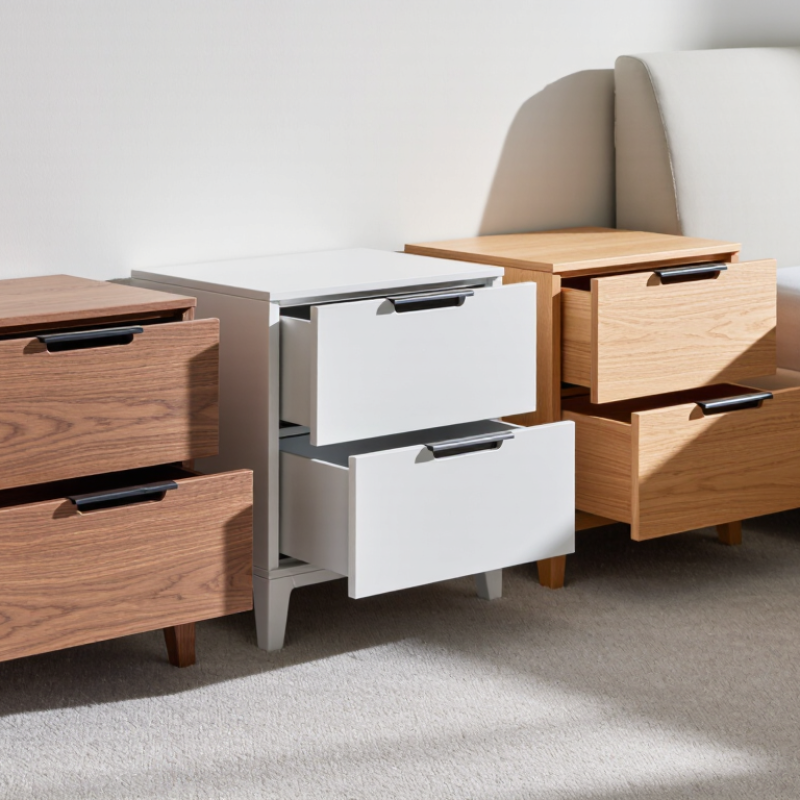
Bedside cabinets are compact storage units placed beside beds in homes, hotels, hospitals, and serviced apartments. They usually include drawers, shelves, or a small cupboard for personal items. In the US$648.9B global furniture market, this category is small but commercially important. It combines storage, bedroom design, safety, and daily convenience.
For global buyers, a reliable manufacturer should provide consistent dimensions, stable materials, and clear production records. Common options include engineered wood, solid timber, metal, and recycled panels. Buyers should check moisture resistance, drawer performance, edge finishing, and packaging strength. A cabinet may look attractive in a showroom but fail after repeated opening. That weakness is easy to miss. Factory audits, sample testing, and inspection reports can reduce this risk. Product documentation should also address applicable safety and chemical requirements in the destination market.
Tips: Confirm bedside height before ordering. A cabinet should align comfortably with the mattress. Request a full-size sample when possible. Test drawer gaps, corner edges, and surface durability. Ask for carton drop-test results and replacement-part support. Avoid choosing only by the lowest quotation; unclear specifications often create higher costs later. Even careful sourcing has uncertainty, especially with new suppliers. Review every assumption before production.
Top Bedside Cabinet Manufacturers for Global Buyers
Bedside cabinets are part of the bedroom-furniture segment, which sits within the broader global furniture industry. The chart presents the stated global furniture market benchmark of US$648.9 billion and does not include company or brand-level data.
Demand Analysis: Applying Grand View Research’s 5.2% Furniture CAGR Forecast
The cited 5.2% furniture CAGR forecast signals steady expansion for bedside cabinet sourcing. Global buyers should treat it as a planning reference, not a guaranteed sales result. Demand is real. Yet regional preferences can change quickly.
Experienced manufacturers usually study bedroom sizes, retail prices, and delivery conditions before confirming production. A compact cabinet may measure 450 millimeters wide, with one drawer and a lower shelf. Urban buyers often prefer slim profiles, rounded edges, and easy-clean finishes. Sustainable materials also attract attention, but suppliers should provide clear composition data and responsible sourcing records.
Reliable factories support this growth with repeatable quality checks. Inspectors should review drawer alignment, surface resistance, hardware strength, and carton protection. Moisture-resistant panels may reduce damage during long-distance shipping. However, higher specifications can increase costs and extend lead times. That trade-off deserves honest calculation. Initial demand estimates may be wrong. Buyers can reduce risk through sample approval, small trial orders, and documented inspection points. Production capacity should match realistic forecasts instead of optimistic targets. Suppliers with export experience can also explain pallet limits, loading methods, and destination requirements. These practical details often matter more than attractive catalog images.
Manufacturer Categories: OEM, ODM, Contract, and Retail-Focused Bedside Cabinet Producers
Bedside cabinet sourcing changes significantly by manufacturer category. OEM producers build to a buyer’s drawings, fixed dimensions, and approved materials. They suit retail groups with stable designs and repeat orders. ODM manufacturers offer existing structures, then adjust finishes, handles, drawers, or packaging. This model can shorten development time, but design exclusivity may require careful contractual checks.
Contract manufacturers focus on production capacity and process control. They often support custom tooling, phased inspections, and container-level planning. Retail-focused producers usually maintain ready-to-sell collections, barcode packaging, and smaller minimum order quantities. They can help buyers test walnut-effect panels, soft-close runners, and compact 45-centimeter widths before larger commitments. The choice is practical, not glamorous.
Grand View Research valued the global furniture market at approximately USD 516.66 billion in 2022. Its report also projects continued growth through 2030, supporting stronger demand for flexible bedroom furniture suppliers. IMARC Group estimated the furniture market at USD 688.7 billion in 2023, using a broader market definition. These figures are not directly comparable. That difference deserves attention.
A reliable evaluation should combine samples, factory records, material certificates, and third-party inspections. Check drawer alignment after repeated opening cycles. Measure carton compression before shipping. Ask how moisture content is controlled for solid wood components. I have found that attractive samples can hide weak back panels or inconsistent edge sealing. Supplier categories help narrow the search, but production evidence must make the final decision.
Compliance Standards: Comparing EN 14749, ASTM F2057, FSC, and ISO 9001 Credentials
For global buyers, compliance credentials can reveal more than a polished product photo. EN 14749 evaluates household storage furniture through stability, strength, and safety tests. It is highly relevant to many bedside cabinets. ASTM F2057 focuses on clothing storage units and tip-over resistance. Its applicability depends on the cabinet’s design and intended use. Do not treat these standards as interchangeable. Ask for the exact test report, model number, test method, and laboratory details.
FSC certification addresses responsible forest sourcing, not cabinet stability or child safety. Confirm whether the certificate covers the complete product, selected components, or only the material supply chain. ISO 9001 shows that a manufacturer operates a documented quality management system. It does not automatically prove that every cabinet meets EN 14749 or ASTM F2057. In procurement reviews, I would inspect production records, hardware checks, packaging tests, and corrective-action reports. Certificates can be genuine yet incomplete. That detail is easy to miss.
Tips: Request current certificates and verify their scope with the issuing organization. Compare the tested dimensions with your purchase specification. Ask for anti-tip hardware, wall-fixing instructions, and sample inspection photos. A factory may pass one test and still produce inconsistent batches. Keep a retained sample, inspection checklist, and signed approval record. My own checklist would also include drawer-stop performance and sharp-edge checks, because formal compliance may not cover every practical risk.
Global Buyer Scorecard: MOQ, Capacity, Lead Time, Pricing, and Export Records
Top Bed Side Cabinet Manufacturers for Global Buyers
Global Buyer Scorecard: MOQ, Capacity, Lead Time, Pricing, and Export Records
Choosing a bedside cabinet manufacturer requires more than comparing catalog prices. A practical scorecard should begin with MOQ, monthly capacity, and production stability. Low MOQ can help new retailers test demand, while larger capacity supports chain-store programs. Ask for recent production schedules, not only stated figures. A factory may quote 30 days, yet peak-season delays can extend delivery by two weeks.
Tips: Request a written quotation showing materials, hardware, packaging, and payment terms. Compare prices using the same specifications. Check whether the quoted board thickness matches the approved sample. Small differences matter. Inspect drawer alignment, edge finishing, and carton strength before placing a larger order.
Lead time should include sampling, approval, production, inspection, and shipping preparation. Reliable manufacturers explain each stage clearly and identify possible bottlenecks. Export records can reveal useful experience, including destination markets, shipment frequency, and document accuracy. Buyers should verify commercial invoices, packing lists, certificates, and container photos through suitable channels. Do not treat a long export history as automatic proof of quality. I have seen experienced suppliers repeat packaging mistakes. That is worth questioning.
Pricing also needs context. Very low offers may exclude inspection, inner packaging, or replacement parts. Request a landed-cost estimate when possible, including freight assumptions and customs-related charges. A balanced supplier scorecard should record evidence, contact dates, sample results, and unresolved concerns. It may look less impressive, but it supports better decisions.