A cleanroom’s temperature can shift before anyone notices it. Yet a small drift may affect sensitive processes, equipment performance, or product quality. That is why choosing a Cleanroom Chiller System requires more than comparing cooling capacity. Engineers also assess temperature stability, humidity control, filtration compatibility, redundancy, energy use, and service access. A quiet pump room matters, too.
ASHRAE Fellow William Bahnfleth is an HVAC researcher and former ASHRAE president. A practical paraphrase of principles in his work is: “Judge cooling as part of the entire environmental-control system.” This is not a verbatim quotation, but it captures an important design point. Chillers work alongside air handlers, controls, sensors, and room-level requirements. A strong unit can still disappoint if the system around it is poorly matched.
This overview examines ten chiller-system options through practical selection criteria, not a single universal ranking. Facility needs vary. A pharmaceutical suite, semiconductor line, and laboratory may require different operating ranges and redundancy plans. We will consider air-cooled and water-cooled designs, modular configurations, and control features that support steady operation. We will also flag trade-offs, because efficiency claims do not tell the whole story. Specifications need verification against site conditions, commissioning records, and qualified engineering advice. There is no perfect chiller. The useful question is which system fits the room, process, and risk profile.
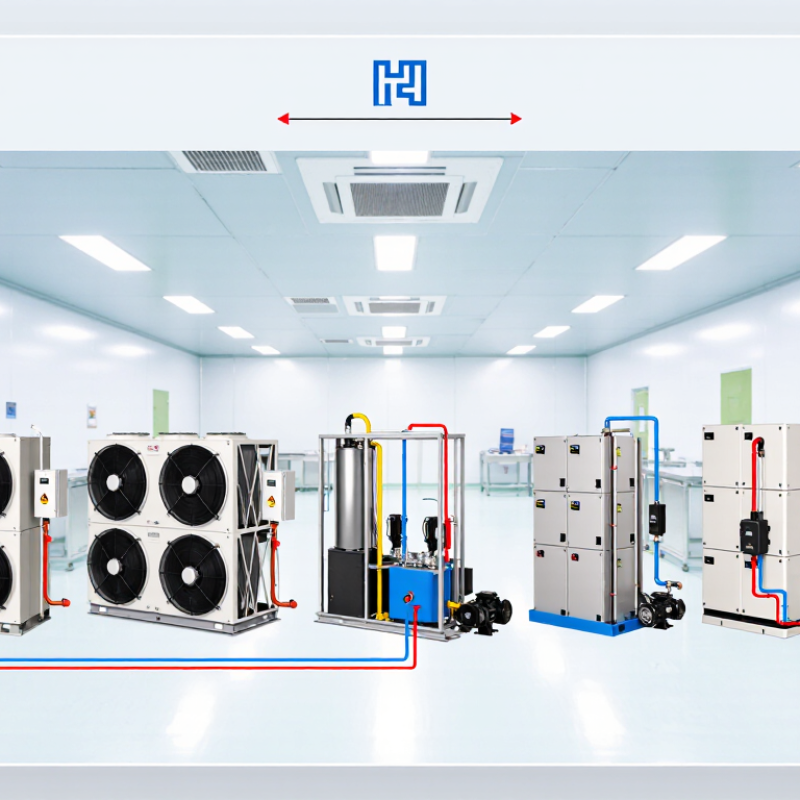
A cleanroom chiller system removes heat from water and sends the cooled water to air-handling coils or process equipment. Inside the chiller, refrigerant absorbs heat in an evaporator, then releases it through a condenser. A compressor drives this cycle. Pumps carry chilled water through insulated pipes, while valves adjust flow to match changing demand.
The chiller supports stable room conditions, but it does not control cleanliness by itself. HEPA filtration, airflow, pressure, and humidity require coordinated systems. That distinction is easy to miss. For example, a coil may cool incoming air, while separate controls manage moisture and room pressure. Setpoints vary by process and design; chilled-water temperatures around 6–12°C are common in some applications, but not universal.
Operators should check supply and return temperatures, water flow, filter condition, and alarms. A blocked strainer or weak pump can reduce cooling even when the chiller appears to run normally. Small details matter. Backup capacity may help protect sensitive operations, though extra equipment also adds cost and maintenance. Real operating data should guide system choices, not assumptions alone.



Copyright © CUSTOM Building Products 2025
Products | Resources | Interactive Tools | Warranties | Privacy Policy | Terms of Use | Technical Training