7 Tips for Choosing the Right Wooden Door Hinge
Choosing the right Wooden Door Hinge is not a minor finishing decision. It affects alignment, movement, noise, security, and the door’s working life. A hinge may look beautiful in a showroom, yet fail when fitted to a heavy oak door. That mistake is more common than many homeowners expect.
Door-hardware consultant John C. Henshaw advises, “A good hinge should disappear visually, but never disappear from your maintenance plan.” His point is practical. Measure the door’s weight, height, thickness, and opening direction before comparing finishes. Then examine hinge size, load capacity, bearing design, screw quality, and corrosion resistance. A soft-close hinge may suit a quiet bedroom, while a ball-bearing model may perform better on a solid entrance door. Small details matter.
The guide, “7 Tips for Choosing the Right Wooden Door Hinge,” explores these choices through real fitting conditions. It considers timber movement, frame strength, hinge spacing, and daily traffic. It also explains why a stylish finish cannot compensate for weak knuckles or short screws. Do not trust appearance alone. That lesson is easy to forget.
There is room for reflection, too. Many buyers focus on brass, black, or stainless steel before checking compatibility. I have seen attractive hinges installed on poorly supported frames, creating uneven gaps within months. The right choice begins with evidence, careful measurement, and honest expectations. A Wooden Door Hinge should support the door quietly, repeatedly, and safely for years.
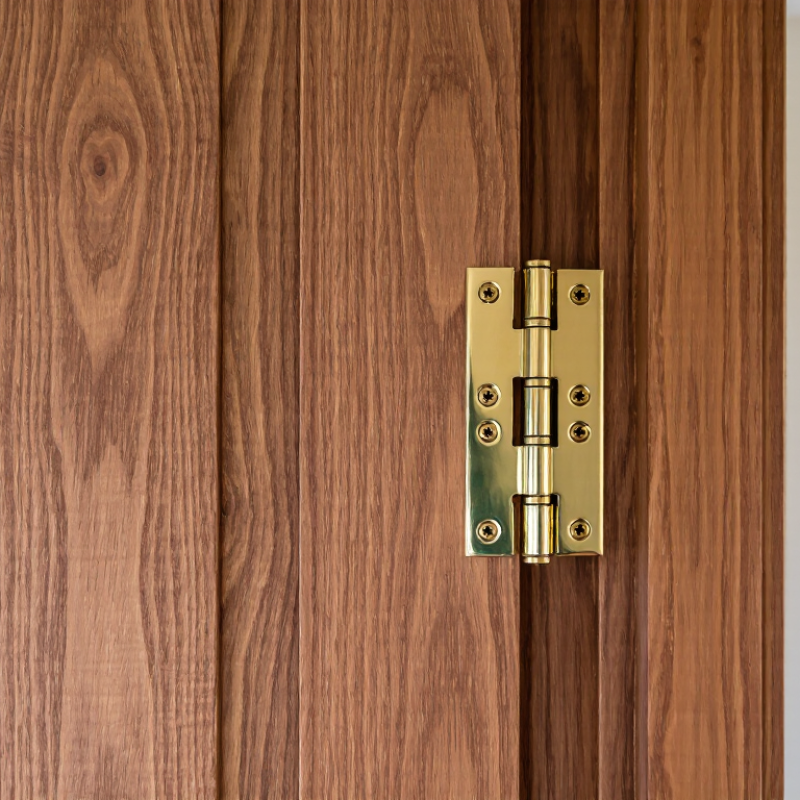
Understanding Wooden Door Hinge Types and Their Uses
7 Tips for Choosing the Right Wooden Door Hinge
Understanding hinge types is essential before selecting hardware for a wooden door. Butt hinges suit most interior doors because they offer simple alignment and dependable support. Ball-bearing hinges work better on heavier doors, such as solid oak or fire-rated timber doors. Their reduced friction helps prevent sagging over time. Pivot hinges allow a door to rotate from floor and ceiling points. They suit wide doors, but installation requires accurate measurements. Concealed hinges create a clean appearance and are useful for modern interiors. However, adjustment can be less forgiving.
Tip 1 Check the door’s weight, thickness, and swing direction. Never rely on appearance alone. A heavy door may need three or more hinges, depending on its construction and the manufacturer’s load guidance.
Tip 2 Match the hinge material to the environment. Stainless steel or corrosion-resistant finishes are safer choices for humid rooms.
Tip 3 Measure the hinge leaf and screw positions carefully. Small errors can create rubbing, uneven gaps, or weak fixing points.
In practical installation work, the frame often causes more trouble than the hinge. A twisted frame can make a good hinge seem defective. Use long, suitable screws that grip the solid frame, not only thin trim.
Tip 4 Test the door slowly after fitting each hinge. Listen for scraping.
Tip 5 Leave enough clearance for seasonal wood movement, especially with exterior doors.
I once underestimated this change, and the door needed adjustment later. That mistake is worth remembering.
A hinge should support the door, not hide poor alignment.
Choosing Durable Materials and Protective Finishes
A wooden door hinge must carry repeated weight without bending, squeaking, or staining the door frame. Durable materials make that possible. Stainless steel suits humid rooms because it resists rust and moisture. Solid brass offers a warm appearance and reliable movement, but its surface can change over time. Steel is strong and affordable, especially when protected with a quality coating.
Tip: Match the hinge material to the room. A bathroom or coastal home needs stronger moisture resistance than a dry interior hallway. Check the door’s weight, thickness, and opening frequency before choosing a hinge size. A hinge that looks attractive may still be too light for a heavy solid-wood door.
Protective finishes deserve close attention. Look for powder coating, electroplating, or another finish designed to resist scratches and corrosion. The coating should cover edges, screw holes, and moving areas evenly. These small details often reveal manufacturing quality. However, no finish lasts forever. Dust, damp air, and harsh cleaners can weaken it. Wipe hinges with a soft cloth and use a suitable lubricant sparingly. Too much oil attracts grit.
Tip: Test the hinge before full installation when possible. Open the door slowly and listen for rough movement. I have seen a smooth-looking hinge develop noise after poor alignment. That mistake is easy to overlook. Recheck the screws, spacing, and finish after several weeks, especially in changing weather. A durable hinge is not only well-made; it is correctly matched, installed, and maintained.
Checking Door Alignment, Swing Direction, and Installation Needs
A wooden door hinge should match the door’s alignment, swing direction, and installation conditions. Begin by checking the frame with a level. A leaning jamb can make a good hinge appear faulty. Measure the existing hinge leaves, pin diameter, and corner shape before purchasing replacements. Small differences can create unwanted gaps.
Decide whether the door swings inward or outward, and note the left or right hand position. The hinge knuckles must face the correct side. Check the door’s weight and thickness as well. Heavy solid-wood doors usually need stronger hinges or an additional hinge. Lightweight interior doors may not require that support. Do not guess.
Installation needs deserve equal attention. Confirm that the hinge fits the mortise without forcing the wood. Use screws long enough to reach solid framing, but avoid piercing the opposite face. A sharp chisel helps create clean recesses.
Test the door after fitting each hinge, rather than tightening everything immediately.
I once ignored a slight frame twist, and the door rubbed near the top corner. That mistake was avoidable.
Leave a small, even clearance around the door, then adjust the hinge position gradually. Check the swing path for nearby walls, cabinets, and flooring. A hinge can work perfectly while the complete door movement remains impractical. Freshly painted edges may also need extra clearance, which is easy to overlook.
Comparing Design, Maintenance, and Long-Term Value
Choosing a wooden door hinge is not only a design decision. It affects movement, maintenance, and the door’s service life. Start by matching hinge size and load capacity to the door’s weight, height, and opening frequency. A solid interior door may need less hardware than a heavy exterior door. Measure twice. Check leaf thickness, screw spacing, knuckle clearance, and corner shape before ordering. A decorative finish should suit the room, but it must not hide weak construction or poor alignment.
Maintenance begins with material selection. In damp entrances, corrosion-resistant metal and a durable finish can reduce staining and seized pins. Dry rooms still collect dust around the knuckle. Wipe the hinge with a soft cloth, then apply a small amount of suitable lubricant when movement becomes noisy. Do not over-oil it. Oil can attract grit and mark painted wood. Wood moves with humidity, so inspect door gaps each season. A door that rubs may need adjustment, not a stronger hinge.
Long-term value includes replacement effort, not only purchase price. Choose common dimensions, removable pins, and accessible screws when future servicing matters. Reliable hinges should open smoothly without forcing the frame. Look for consistent machining and screws long enough to grip sound timber. I once ignored slight sagging, and widened screw holes made the repair harder. The costliest option is not automatically wiser. Compare climate, daily use, finish durability, and repair access. Small details matter.