Choosing the best Air Pick in 2026 requires more than comparing impact ratings or online prices. The right tool must match the material, work angle, air supply, operator, and job duration. A compact pick may feel efficient on a repair site. A heavier model may perform better on dense concrete, but it can increase fatigue within minutes.
Industry guidance supports a careful approach. The U.S. Department of Energy reports that compressed-air systems can represent about 10% of industrial electricity use, making air consumption an important ownership cost. A tool demanding excessive cubic feet per minute may reduce productivity when the compressor cannot maintain pressure. The Occupational Safety and Health Administration sets an 8-hour permissible noise exposure limit of 90 dBA, while NIOSH recommends a more protective 85 dBA limit. These figures make vibration, noise, and hearing protection practical selection issues, not optional details.
ISO 11148-4 also provides a professional reference for handheld non-electric power tools, including percussion equipment. Buyers should examine rated pressure, air consumption, blows per minute, shank compatibility, mass, trigger design, and maintenance access. Manufacturer figures still need verification under real site conditions. A catalogue number can mislead. Hose length, moisture, leaks, and worn fittings may reduce actual impact strength.
In this guide, we compare Air Pick options through performance, safety, durability, and operating cost. No single model wins every application. That is the uncomfortable part. The best choice depends on evidence from the worksite, not marketing language alone.
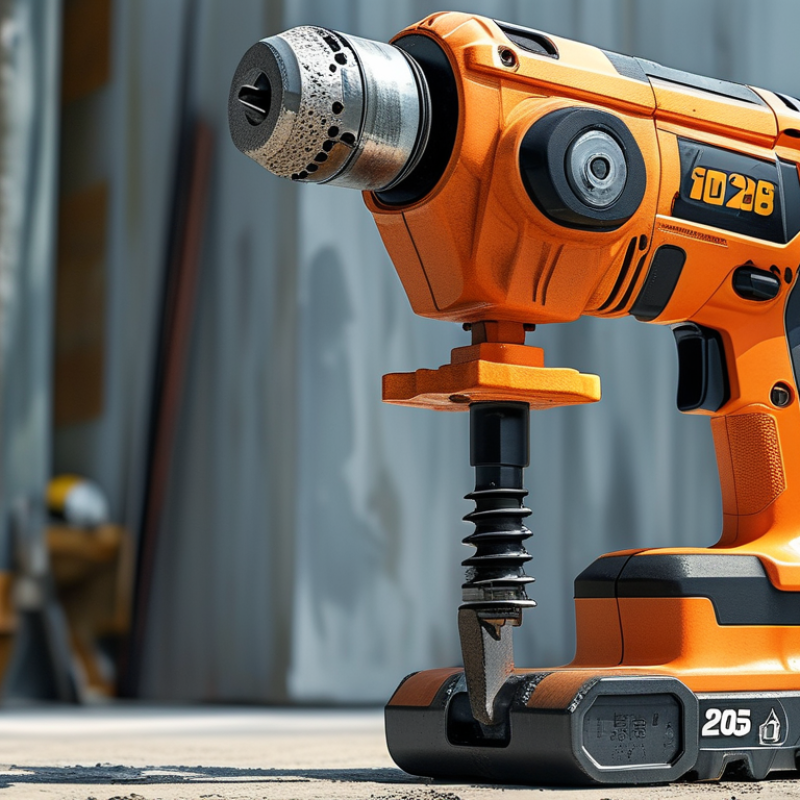
How to Choose the Best Air Pick in 2026?
An air pick is a compact pneumatic tool for breaking, scaling, and chipping hard materials. It uses compressed air to drive a piston back and forth inside the cylinder. The piston strikes the attached tool repeatedly. That impact transfers through a pointed bit or chisel, loosening concrete, masonry, asphalt, or compacted soil.
The mechanism is simple, but the result depends on several working conditions. A higher blow rate can remove brittle material quickly. Higher impact energy may suit thicker or tougher surfaces. However, excessive force can damage delicate edges and tire the operator. Check air consumption before choosing one. A small compressor may struggle to maintain pressure during continuous use. Hose diameter matters too. A restricted hose can make a powerful air pick feel surprisingly weak.
In practical maintenance work, balance is often more valuable than maximum power. Look for manageable weight, low vibration, and controls that remain usable with gloves. Confirm the tool’s rated pressure, blows per minute, and recommended bit sizes from reliable technical documents. Noise protection and eye protection are essential around flying fragments. I have found that “stronger” is not always better; that assumption deserves questioning. A lighter tool may produce cleaner work and fewer handling mistakes. Air Picks also need regular lubrication and inspection. Ignoring small air leaks can reduce performance and increase compressor demand.
| Selection Factor | Typical Range or Option | What It Means | Best-Fit Application | Buying Recommendation |
|---|---|---|---|---|
| Tool type | Pneumatic pick, chipping hammer, or breaker | An air pick uses compressed air to drive a piston that repeatedly strikes a fitted bit. | Concrete, masonry, asphalt, frozen ground, scale, and other hard materials | Choose a purpose-built model rather than a general air tool when continuous breaking is required. |
| Operating pressure | Commonly about 5.5–7 bar (80–100 psi) | The pressure required at the tool inlet for the rated performance. | Worksites with standard industrial compressed-air systems | Match the tool requirement to the pressure available after hose, coupler, and filter losses. |
| Air consumption | Approximately 15–60 cfm (425–1,700 L/min), depending on size and duty | The compressor capacity needed to maintain stable impact performance. | Small repair work through heavy-duty demolition | Use the manufacturer's stated consumption and select a compressor with reserve capacity for continuous use. |
| Impact frequency | Roughly 800–2,500 blows per minute | How often the piston strikes the bit; frequency is only one part of breaking performance. | Fast chipping, surface removal, or controlled material breaking | Prioritize impact energy and material compatibility instead of choosing solely by blows per minute. |
| Impact energy | Light, medium, or heavy duty; exact values vary by design | The energy delivered by each strike, which strongly affects penetration and breaking ability. | Light chipping, concrete removal, or asphalt and hard-rock work | Select the lowest impact class that can complete the task to reduce operator fatigue and material damage. |
| Tool weight | Approximately 2–30 kg (4.4–66 lb) | Weight influences portability, control, vibration exposure, and the force required from the operator. | Overhead, horizontal, floor-level, or stationary breaking | Choose a lighter model for overhead or extended work and a heavier model for ground-level breaking. |
| Shank and bit system | Hexagonal, round, or other tool-specific shanks | The shank must fit the retainer and transfer impact safely to the working bit. | Pointing, scaling, cutting, clay spading, or chiseling | Confirm shank size, bit length, retainer type, and local replacement-bit availability before purchase. |
| Handle configuration | Straight handle, pistol grip, or side-handle design | Handle layout affects balance, control, and access to confined spaces. | Tight spaces, vertical surfaces, floors, and general demolition | Choose the configuration that keeps wrists neutral and provides secure two-handed control when needed. |
| Vibration control | Standard or vibration-reduced construction | Lower transmitted vibration can improve comfort, but it does not eliminate exposure risk. | Long shifts and repeated professional use | Compare declared vibration values and follow workplace exposure limits and rest practices. |
| Noise level | Often above 90 dB(A) during operation | Pneumatic impact tools can generate hazardous noise, especially in enclosed areas. | Construction, maintenance, foundry, and demolition environments | Use hearing protection, consider noise control, and check the measured sound rating in the manual. |
| Air connection and hose | Commonly 3/8–1/2 in. connections; hose size depends on airflow | A restrictive hose or fitting can reduce pressure at the tool and lower performance. | Portable compressors and fixed air lines | Use the recommended hose inner diameter, short runs where practical, and high-flow couplers. |
| Lubrication | Manual in-line oiling or an automatic lubricator | Lubrication reduces internal friction and helps protect the piston and cylinder. | Intermittent and continuous pneumatic-tool operation | Follow the tool manual; incorrect oil or over-lubrication can cause damage or poor performance. |
| Compressor compatibility | Portable compressor for light duty; high-output compressor for heavy duty | The compressor must deliver the required airflow continuously, not only reach the stated pressure. | Jobsite repairs through prolonged demolition | Compare delivered air at operating pressure and allow practical reserve capacity. |
| Safety and maintenance | Bit inspection, secure retainer, hose checks, eye and hearing protection | Loose bits, damaged hoses, flying fragments, noise, dust, and vibration are key hazards. | All air-pick applications | Choose a tool with accessible service parts and clear maintenance instructions; inspect it before every shift. |
Note: Specifications are typical industry ranges for pneumatic picks and chipping tools. Actual pressure, airflow, impact rate, noise, vibration, and weight depend on the tool design and the manufacturer's technical documentation.


Copyright © CUSTOM Building Products 2025
Products | Resources | Interactive Tools | Warranties | Privacy Policy | Terms of Use | Technical Training