Choosing Screen Printing Ink Manufacturers in 2026 requires more than comparing price lists. Ink affects color accuracy, curing performance, garment feel, production speed, and customer returns. A supplier may offer a low quotation, yet inconsistent viscosity can create blocked screens, uneven coverage, and wasted fabric.
Industry reports provide useful direction. Grand View Research identifies packaging, textiles, and promotional products as important application areas for screen printing inks. Smithers also highlights stronger demand for sustainable, efficient, and digitally connected printing processes in its global printing market research. These trends make supplier evaluation more technical. Buyers should examine ink chemistry, curing temperatures, shelf life, batch testing, pigment stability, and technical support. Ask for current technical data sheets. Request production samples, not only catalog colors.
Details matter.
Scott Fresener, a long-time screen-printing educator and industry consultant, has said, “Screen printing is both an art and a science.” That observation remains practical in 2026. Experienced Screen Printing Ink Manufacturers should explain how their products behave on cotton, polyester, coated paper, plastics, or recycled substrates. They should also provide transparent information about restricted substances, environmental claims, and quality certifications.
A reliable manufacturer does not promise perfection. It documents limitations. It discusses curing windows, storage conditions, and possible adhesion problems before a purchase. Buyers should compare laboratory results with real press performance. A perfect sample can still disappoint on a busy production line. This is where experience matters: visit the facility when possible, inspect quality-control records, and speak with technical staff. The strongest choice balances verified performance, responsive service, responsible manufacturing, and long-term consistency. Cost matters, but downtime costs more.
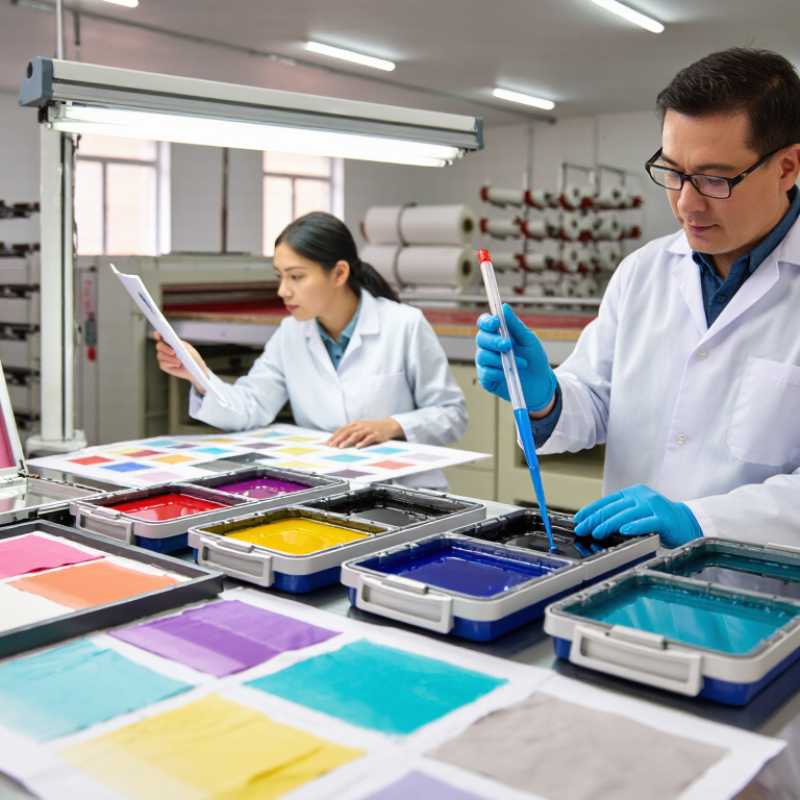
Ink selection begins with the substrate, not the manufacturer. Water-based inks suit cotton apparel and offer a soft hand feel. Plastisol inks provide strong opacity and reliable curing on dark textiles. Solvent-based inks adhere to plastics, metals, and outdoor signs. UV and LED-UV inks cure quickly on rigid surfaces, but require compatible lamps and careful safety controls. Silicone inks remain useful for stretch fabrics, although their processing window can be unforgiving.
Mordor Intelligence’s 2025 textile printing forecast estimates the market will expand at a compound annual growth rate above 8% through 2030. This growth increases demand for lower-impact, durable formulations. The Smithers report, The Future of Global Printing to 2029, also identifies packaging and specialty printing as important development areas. These figures are useful, but forecasts are not instructions. My practical test is simple: print on the real substrate, cure it, then wash, scratch, bend, or expose it before approval. A glossy sample can mislead.
Tips: Ask manufacturers for technical data sheets, curing ranges, viscosity values, and migration information. Request a small trial batch. Check color consistency between lots. Confirm laboratory support and realistic delivery times. Do not choose by price alone. A cheaper ink may require slower production, extra curing, or more rejects. I still question “universal” inks; they sound convenient, but performance often changes with mesh count, squeegee pressure, humidity, and machine speed.



Copyright © CUSTOM Building Products 2025
Products | Resources | Interactive Tools | Warranties | Privacy Policy | Terms of Use | Technical Training