China has become a major sourcing base for architectural, automotive, display, and photovoltaic glass. Its manufacturers now offer Anti-Glare Glass with etched surfaces, chemical treatments, and multilayer coatings. These options can reduce distracting reflections while preserving image clarity, touch sensitivity, and daylight transmission.
Market estimates show strong demand, although definitions vary. Fortune Business Insights valued the global anti-reflective coatings market at approximately USD 4.4 billion in 2023. Grand View Research also identifies displays, eyewear, solar modules, and electronics as important growth applications. These reports do not measure Anti-Glare Glass identically. Buyers should examine the methodology carefully.
Dr. James F. Shackelford, a respected materials-science author, emphasizes that “materials determine performance.” His principle applies directly here. Glass thickness, surface texture, coating durability, and cleaning conditions can change real-world results. A panel that performs well in a laboratory may show fingerprints, haze, or uneven reflections beside a bright window.
China’s leading suppliers increasingly provide measurable specifications, including haze, gloss, visible-light transmittance, reflectance, hardness, and abrasion resistance. Some also support small prototype runs before mass production. That practical step matters.
Not every low-reflection product is equally reliable. Certification, batch consistency, edge quality, packaging, and export experience deserve equal attention. This guide examines China’s top Anti-Glare Glass manufacturers for global buyers, focusing on technical capability, customization, quality controls, and application fit. The ranking is useful, but not absolute. Product performance still depends on the buyer’s environment, testing standards, and installation details.
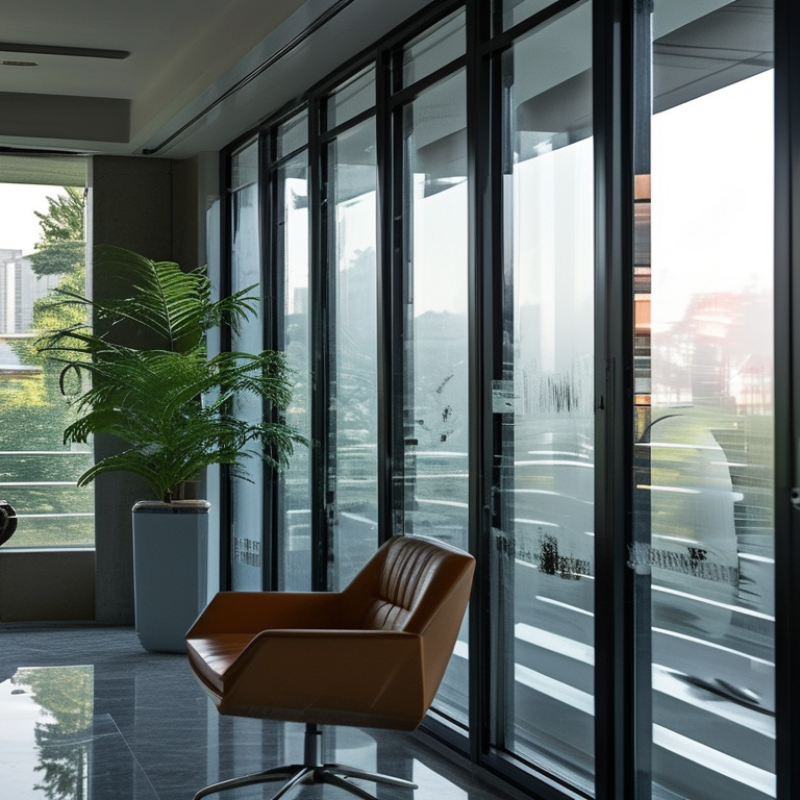
Anti-glare glass is glass treated with a fine etched or coated surface that scatters incoming light. It reduces mirror-like reflections from lamps, windows, and overhead fixtures. Unlike anti-reflective glass, it does not mainly cancel reflected light through optical layers. Instead, it spreads that light across the surface. The image feels calmer.
Its main features include lower glare, improved viewing comfort, and better screen readability in bright spaces. Surface texture, haze, light transmission, and gloss level must match the application. A rougher finish can reduce reflections more strongly, but it may soften small text or detailed images.
No coating solves every reflection. This trade-off is often missed during early purchasing discussions. Reliable manufacturers should provide measured optical data, surface uniformity checks, adhesion tests, and abrasion results. Buyers should also request samples under real lighting, not only studio photographs.
Common applications include information displays, touch panels, control screens, museum cases, medical equipment, and architectural partitions.
In vehicles, anti-glare glass can improve instrument visibility, although optical distortion requires careful review. For outdoor displays, buyers should examine ultraviolet resistance, moisture performance, cleaning tolerance, and operating temperature. Chinese manufacturers serving global projects may offer cutting, drilling, tempering, and custom dimensions, but specifications must be confirmed in writing. A sample that performs well indoors may fail near direct sunlight. Small details matter.



Copyright © CUSTOM Building Products 2025
Products | Resources | Interactive Tools | Warranties | Privacy Policy | Terms of Use | Technical Training