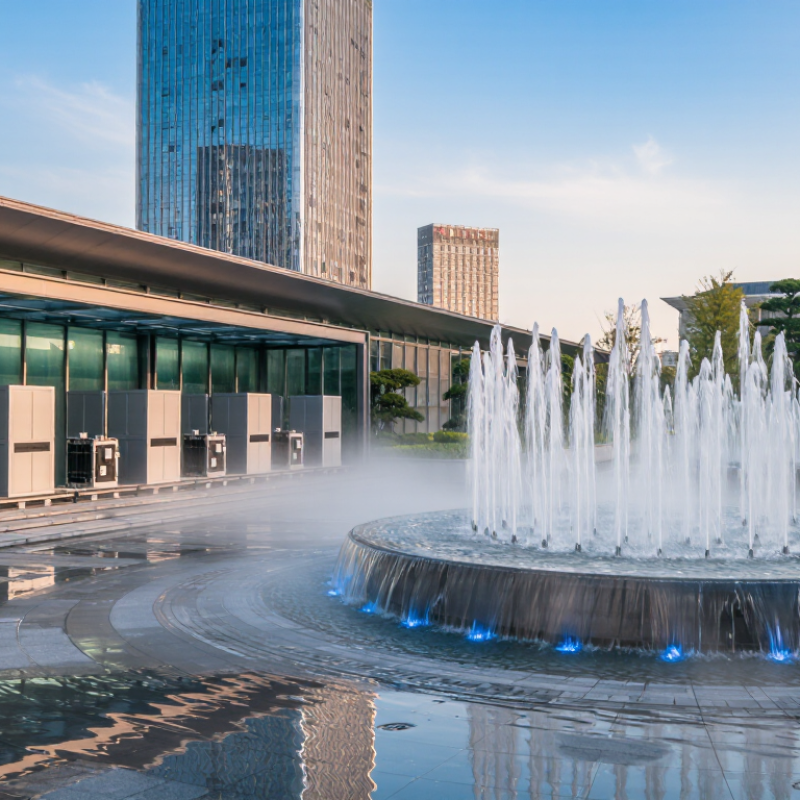
China has become a major sourcing destination for commercial and architectural water features. Its manufacturers offer compact indoor units, large outdoor installations, and custom systems for hotels, museums, shopping centers, and public gardens. Yet choosing the right Fog Fountain supplier requires more than comparing prices.
Mark Fuller, founder of WET Design, has expressed a valuable design principle: “Water is a medium for creating emotion.” This idea matters when evaluating Chinese suppliers. A reliable manufacturer should explain how mist density, lighting, pump pressure, nozzle spacing, and sound levels affect the visitor’s experience. The best teams also provide drawings, material samples, maintenance plans, and realistic production schedules.
Look closely at the details. Ask whether the nozzle uses stainless steel or lower-grade metal. Check how easily filters can be removed. Request photographs of completed projects, not only polished factory images. A supplier may promise quiet operation, but the pump room can tell another story. No manufacturer is perfect. That is uncomfortable, but useful.
Strong suppliers usually combine engineering knowledge with practical installation experience. They understand humidity, drainage, water treatment, electrical safety, and local project conditions. Certifications and test reports can support trust, but they should not replace direct technical discussions. A factory visit may reveal more than a long brochure.
This guide will compare China’s leading Fog Fountain manufacturers and suppliers. It will consider product quality, customization, communication, after-sales support, and long-term operating value. The final choice should fit the site, budget, climate, and maintenance team. Fancy mist is easy. Reliable mist is harder.
A fog fountain is a decorative water feature that turns liquid water into a cool, visible mist. It usually combines an ultrasonic atomizer, a small reservoir, airflow, and lighting. The atomizer vibrates at high frequency. This vibration breaks the water surface into tiny droplets. Air movement then carries the droplets above the basin, creating a floating cloud.
The effect looks effortless. It is not. Droplet size, water temperature, airflow, and room humidity all affect the result. Many ultrasonic units produce droplets around 3–5 micrometers, although performance varies by design. The 2024 ASHRAE Handbook recommends controlling indoor relative humidity within a practical comfort range. The U.S. Environmental Protection Agency suggests keeping indoor humidity below 60%, ideally between 30% and 50%. A fog fountain is not a replacement for a certified humidifier. That distinction is often overlooked. I would also question any supplier specification without test conditions.
Tips: Use filtered or demineralized water when possible. Minerals can form white dust and shorten transducer life. Clean the reservoir regularly, especially in warm environments. Check the mist output after several hours, not only during a showroom demonstration. Stable airflow matters more than dramatic lighting. Also, protect nearby floors and electrical connections from condensation. Small design mistakes can become expensive maintenance problems.
China’s fog fountain manufacturing industry benefits from a dense supply chain. Pumps, ultrasonic atomizers, LED modules, stainless-steel basins, and control systems can often be sourced within one production region. The National Bureau of Statistics reported China’s manufacturing value added at about RMB 40.3 trillion in 2023. This scale supports faster tooling and component coordination.
The key feature is integrated customization. Manufacturers commonly adjust mist density, nozzle spacing, basin size, lighting temperature, and programmable control systems for hotels, gardens, museums, and public plazas. Grand View Research’s 2024 water feature market report identifies commercial and architectural projects as important demand areas. However, most reports group fog fountains with wider water features. The data is useful, but not perfectly precise.
Quality depends on testing, not appearance alone. Experienced factories check atomizer output, pump noise, electrical insulation, drainage, and continuous operating hours. EN 60335-2-41 and IEC 60598 references can guide relevant safety checks, although project requirements may differ. Ask for test records and sample videos. Small failures matter. A clogged nozzle can ruin the visual effect. Energy use also deserves attention; an attractive installation may consume more power than expected. Clear maintenance access, replaceable modules, and corrosion-resistant materials make long-term operation more reliable.
Evaluating fog fountain manufacturers and suppliers in China requires more than comparing online prices. Ask for factory photos, production capacity, and recent project records. A reliable supplier should explain nozzle layout, pump performance, water filtration, and control systems in clear language. Vague answers are warning signs.
Request a technical drawing with dimensions, materials, power requirements, and maintenance access. Stainless steel grade matters, especially in humid public spaces. Ask whether the fog system can maintain a consistent mist under changing water pressure. A live video test is useful, but it should show the full system, not only a close-up nozzle. Better still, inspect a working installation through an independent local representative.
Check how the supplier handles quality control. They should provide inspection records, component specifications, packaging details, and export documents. Ask about spare nozzles, pump replacement, troubleshooting support, and response times after delivery. A low quotation may exclude wiring, installation tools, or site adjustments. Read every line. One practical lesson is simple: attractive brochures do not prove engineering ability. I would also question suppliers who promise perfect results without checking climate, water quality, and visitor safety. Some evaluations remain incomplete because buyers focus too heavily on price. A factory audit, sample review, and written warranty create stronger evidence than repeated sales claims.
China Best Fog Fountain Manufacturers and Suppliers?
Types of Fog Fountains and Their Common Applications
Fog fountains create a floating-water effect by turning water into fine droplets. Ultrasonic fog fountains suit indoor displays, museums, reception areas, and quiet hotel lobbies. They produce soft mist with limited noise. High-pressure fog fountains create denser clouds for gardens, plazas, stage settings, and large attractions. Hybrid systems combine mist, lighting, and flowing water. Their visual impact is stronger, but installation usually requires more space and control equipment.
Application conditions should guide the choice. Indoor projects need stable humidity control, clean water, and reliable drainage. Outdoor fountains require weather-resistant housings and stronger pumps. Decorative lighting can improve depth, especially at night. However, excessive mist may reduce visibility or make nearby floors slippery. This detail is often overlooked. A dependable manufacturer or supplier should provide pump data, nozzle specifications, material details, maintenance instructions, and clear warranty terms. Product samples and factory testing records also help buyers compare performance fairly.
Tips: Ask for a full water-flow diagram before ordering. Confirm replacement nozzle availability and cleaning procedures. Request a trial video under conditions similar to your site. Do not judge quality by fog density alone. Energy use, noise, water treatment, and installation access matter equally. Some impressive designs fail during routine cleaning. A simpler system may perform better over several seasons.
| Fog Fountain Type | Operating Principle | Typical Water Droplet Range | Main Equipment | Common Applications | Key Advantages | Important Selection Factors |
|---|---|---|---|---|---|---|
| Ultrasonic Fog Fountain | Piezoelectric transducers vibrate at ultrasonic frequencies and break water into a cool, visible mist. | Approximately 1–10 micrometres, depending on transducer design and operating conditions. |
| Indoor decorative displays, hotel lobbies, exhibition installations, tabletop features, themed spaces, and small landscape water features. | Quiet operation, low heat output, compact size, and a visually dense mist effect. | Water quality, transducer service life, reservoir depth, ventilation, electrical protection, and required mist volume. |
| High-Pressure Nozzle Fog Fountain | A high-pressure pump forces filtered water through fine nozzles, producing a spray that appears as fog under suitable conditions. | Often approximately 5–30 micrometres; the actual size depends on pressure, nozzle geometry, and water quality. |
| Large outdoor plazas, park entrances, resort landscapes, public art, cooling walkways, and interactive water installations. | Scalable coverage, adjustable output, and suitability for large installations. | Pump pressure, nozzle clogging risk, filtration level, wind exposure, drainage, noise control, and access for maintenance. |
| Dry-Ice Fog Fountain | Solid carbon dioxide is placed in warm water, creating carbon dioxide gas and a low-lying white fog. | Visible droplets are commonly in the low-micrometre to tens-of-micrometres range after condensation. |
| Stage performances, exhibitions, themed events, photography, ceremonies, and short-duration special effects. | Dense ground-hugging fog and fast visual impact without a continuous fog machine. | Carbon dioxide ventilation, operator training, handling procedures, event duration, water temperature, and local safety requirements. |
| Low-Pressure Atomizing Fountain | Water is mechanically atomized through specially shaped spray nozzles at relatively low pump pressure. | Typically larger than ultrasonic mist and high-pressure fog, commonly ranging from tens to hundreds of micrometres. |
| Decorative garden fountains, small courtyards, retail displays, shaded cooling features, and water-saving visual effects. | Moderate operating cost, straightforward construction, and relatively simple maintenance. | Wind drift, nozzle selection, splash control, pump capacity, water recycling, and the desired visual density. |
| Fog-and-Water-Jet Combination Fountain | A water-jet system combines vertical or arched streams with fog, lighting, and programmable control sequences. | Fog droplets vary by fog-generation method; water-jet droplets are generally much larger than fog particles. |
| Municipal squares, commercial complexes, shopping centers, resorts, cultural venues, and musical fountain shows. | High design flexibility, strong nighttime visibility, and the ability to synchronize water, fog, light, and music. | Control-system compatibility, hydraulic zoning, electrical safety, structural loading, noise, drainage, and service access. |
| Floating Fog Fountain | Fog-generating equipment is installed on a buoyant platform or floating structure positioned on a pond, lake, or reservoir. | Depends on the selected ultrasonic or nozzle-based fog system. |
| Large lakes, artificial ponds, waterfront parks, resort lagoons, outdoor festivals, and landscape centerpiece installations. | Creates a wide visual effect without occupying the entire shoreline and can be positioned in open water. | Buoyancy, wind and wave conditions, anchoring, cable protection, water quality, corrosion resistance, and seasonal removal. |
| Interactive Mist Fountain | Sensors or programmed controls activate fog, lighting, or water effects in response to visitor movement, timing, or external signals. | Usually approximately 5–100 micrometres, depending on the installed fog technology. |
| Children’s play areas, science museums, public parks, visitor centers, festivals, and branded architectural spaces without relying on company-specific branding. | High visitor engagement, flexible programming, and strong educational or recreational value. | Slip resistance, hygiene, sensor reliability, accessibility, splash boundaries, electrical protection, and water treatment. |
| Architectural Indoor Fog Fountain | A controlled fog system is integrated into an indoor basin, sculpture, atrium, or architectural installation. | Commonly approximately 1–30 micrometres, depending on the mist-generation system. |
| Hotels, museums, shopping malls, corporate reception areas, restaurants, galleries, and indoor exhibition halls. | Controlled visual environment, compact footprint, and easy integration with interior lighting and architecture. | Indoor humidity management, condensation prevention, acoustic performance, water hygiene, air circulation, and building-code compliance. |
| Cooling Mist Fountain | Fine water droplets evaporate in moving air and absorb heat, reducing perceived temperature around the installation. | Often approximately 10–50 micrometres for effective evaporation, although the practical range varies by nozzle and pressure. |
| Outdoor dining areas, amusement parks, sports venues, queues, pedestrian spaces, and hot-climate landscape projects. | Provides localized comfort while retaining a decorative fountain appearance. | Ambient temperature, relative humidity, wind speed, water treatment, aerosol management, drainage, and local public-health guidance. |
| Typical Performance and Maintenance Criteria | Performance depends on the relationship between pump capacity, nozzle or transducer output, water quality, environmental conditions, and control programming. | Specified by the selected technology and verified through the operating environment rather than by appearance alone. |
| Applicable to commercial, municipal, hospitality, cultural, entertainment, and residential projects. | Improves reliability, visual consistency, operating safety, and long-term maintenance planning. | Confirm water source, filtration, replacement parts, cleaning intervals, electrical standards, warranty terms, climate suitability, and installation support before procurement. |
Before ordering a fog fountain from China, verify performance rather than trusting attractive catalog images. A reliable supplier should provide pump flow, fog output, operating noise, power consumption, and water-quality requirements. Ask for a live video showing the unit running for at least two hours. Check whether the mist stays low or disappears under ordinary ventilation. Small differences matter.
The WHO’s Guidelines for Safe Recreational Water Environments stress that aerosol-generating water features require careful hygiene control. Request cleaning intervals, disinfection guidance, drainage details, and test records for microbial risks. For electrical safety, ask how the supplier addresses IEC 60335 requirements and local certification needs. Confirm stainless-steel grade, cable protection, emergency shutoff, and protection against dry running. A 2024 Grand View Research analysis also identifies energy efficiency as a major purchasing factor across water-feature equipment, so compare wattage against output, not price alone.
Inspect the factory or use an independent inspection service before shipment. Check welds, nozzle alignment, control-box sealing, spare-part availability, and export packaging. Require a written warranty with response times and replacement procedures. Do not accept “maintenance-free” claims without evidence. I have found that sample testing exposes problems photos conceal, especially unstable fog and excessive pump noise. Even a careful checklist can miss site conditions, so allow time for commissioning adjustments.
This buyer-focused scoring framework highlights the main areas to verify before placing an order. The suggested weights prioritize performance, safety, durability, documentation, and delivery reliability.
Ask for technical drawings, electrical specifications, material details, water-treatment requirements, quality-control records, packaging information, and after-sales terms before approving production.
Copyright © CUSTOM Building Products 2025
Products | Resources | Interactive Tools | Warranties | Privacy Policy | Terms of Use | Technical Training