In 2026, global buyers are seeking carpet that withstands claws, shedding, muddy paws, and daily accidents. Pets Carpet is no longer judged by softness alone. Its fiber, backing, pile height, stain resistance, and cleaning performance all matter. A beautiful surface can still fail under a large dog’s repeated scratching.
This guide explores the main pet-friendly carpet types available across international markets. It considers nylon, polyester, polypropylene, wool blends, loop pile, cut pile, and modular carpet tiles. Each option offers different strengths. Nylon often handles heavy traffic well. Polypropylene can support easier stain care. Wool feels natural and durable, but it may require more careful maintenance. Carpet tiles can simplify replacement when one area becomes badly damaged.
Real homes are rarely perfect.
A hallway may collect wet footprints every morning. A living room may hold fine hair that vacuuming misses. These details can change the best choice. Product descriptions provide useful information, yet they cannot predict every household’s results. Manufacturer instructions, cleaning guidance, fiber composition, and regional quality requirements deserve careful checking before purchase.
The recommendations in this article are based on practical use considerations and established carpet-selection principles. They focus on comfort, maintenance, durability, indoor suitability, and long-term value. However, no Pets Carpet performs equally well for every climate, pet breed, or floor plan. Buyers should compare samples, inspect backing quality, and test cleaning methods on a small area first. That extra step may prevent an expensive mistake.
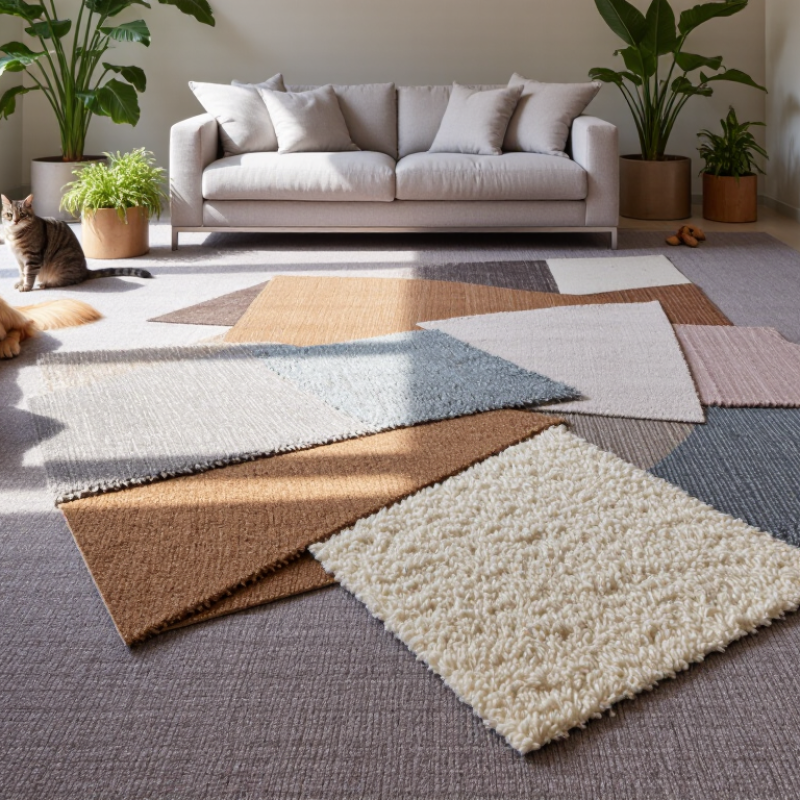
APPA reports that 66% of U.S. households own pets, signaling strong demand for pet-friendly flooring. For global buyers, this statistic matters beyond the American market. Homes with dogs and cats face shed hair, wet paws, scratches, and occasional accidents. Carpet selection must respond to daily use, not showroom appearance alone. That sounds obvious, yet many purchasing decisions still prioritize color first.
Solution-dyed nylon remains practical for busy homes because its fibers resist fading and repeated cleaning. Polyester can provide a softer texture and lower initial cost, but resilience varies by construction. Polypropylene suits some moisture-prone areas and often supports easier stain removal. Dense, low-loop carpets may limit snagging from claws. Cut-pile designs feel comfortable, though longer fibers can trap hair and dust. No material is perfect.
Buyers should request laboratory data, fiber specifications, backing details, and cleaning instructions before placing large orders. Look for low-emission materials and compliance documents suited to the destination market. A removable, moisture-resistant backing may reduce damage, but it cannot replace prompt cleaning. Test samples with fur, muddy water, and furniture movement. Real homes are messier than product photos. APPA’s ownership figure supports demand, but regional pet habits, housing types, and maintenance expectations still require careful review.
The 2023–2024 U.S. National Pet Owners Survey reported that 66% of U.S. households own a pet. The comparison below focuses on carpet constructions and material characteristics that are relevant to pet-owning homes, hospitality spaces, offices, and other high-use interiors worldwide.
| Pet Carpet Type | Typical Fiber or Construction | Key Performance Characteristics | Best-Fit Applications | Cleaning and Maintenance Profile | Global Buyer Considerations |
|---|---|---|---|---|---|
| Solution-Dyed Nylon Carpet High durability | Nylon fibers with color integrated throughout the fiber during manufacturing; commonly available in loop, cut-pile, and patterned constructions. | Strong abrasion resistance, good resilience, and improved colorfastness compared with many surface-dyed options. Suitable for frequent foot and paw traffic. | Entryways, corridors, family rooms, rental housing, pet-care facilities, and other high-traffic interiors. | Regular vacuuming helps remove hair and grit. Prompt spot treatment is recommended for liquid spills and biological stains. Loop structures require care around claws and snagging. | A practical choice where long service life and appearance retention are priorities. Buyers should confirm fiber content, backing construction, and local cleaning requirements. |
| Triexta Carpet Stain resistance | Triexta, also known as PTT, is a polyester-family fiber used in cut-pile and textured carpet constructions. | Naturally low moisture absorption and good resistance to many water-based stains. Soft hand feel and resilient texture are common product characteristics. | Bedrooms, living rooms, apartments, family areas, and moderate-to-heavy residential use. | Vacuuming and immediate blotting are important. Always follow the carpet manufacturer’s care instructions because detergents, heat, and extraction methods can affect appearance. | Attractive for buyers seeking a soft residential surface with stain resistance. Confirm availability of compatible replacement sections before specifying large projects. |
| Solution-Dyed Polyester Carpet Colorfast option | Polyester fibers colored during fiber formation; available in cut pile, textured pile, and some patterned formats. | Good resistance to many water-based stains and strong resistance to fading when the fiber is solution-dyed. Generally softer than many hard-wearing nylon constructions. | Bedrooms, lounges, low-to-moderate traffic rooms, decorative area rugs, and budget-conscious residential projects. | Frequent vacuuming is useful because loose fibers and pet hair can remain visible on textured surfaces. Prompt cleaning reduces the chance of persistent odor. | Often selected for color variety and value. Buyers should evaluate pile density and crushing resistance when pets and heavy furniture are expected. |
| Low-Pile Cut Carpet Easy access cleaning | Short, cut yarn tufts with a relatively low pile height; may be manufactured from nylon, polyester, triexta, or blended fibers. | Fewer deep spaces for hair and debris than high-pile carpet. Usually easier to vacuum and less likely to catch claws than loose, long-loop structures. | Hallways, dining areas, apartments, home offices, waiting rooms, and rooms where routine cleaning is important. | Supports regular vacuuming and spot extraction. Short pile does not eliminate the need for immediate treatment of urine, vomit, or other biological contamination. | A broadly adaptable construction for global residential and commercial use. Performance depends on fiber quality, density, backing, and installation. |
| Textured Pattern Carpet Appearance management | Multi-level or patterned cut-and-loop construction that creates visual variation across the surface. | Texture and pattern can reduce the visual prominence of minor soil, loose hair, and everyday wear. Surface complexity may make deep cleaning more demanding. | Living spaces, hospitality interiors, offices, corridors, and properties where decorative appearance is important. | Vacuum slowly in multiple directions. Use suitable attachments around raised patterns and follow the recommended extraction method to avoid texture distortion. | Useful when buyers want a balance between design and practical appearance. Sample testing is recommended for pet hair visibility and stain removal. |
| Modular Carpet Tiles Sectional replacement | Individual carpet modules, commonly square or plank-shaped, installed over a compatible prepared floor. | Damaged or heavily soiled modules can potentially be removed and replaced without replacing the entire floor. Installation can simplify phased renovation. | Offices, pet-friendly workplaces, veterinary areas, rental properties, corridors, and mixed-use commercial spaces. | Routine vacuuming remains necessary. Localized replacement can address severe damage, but spare modules and correct batch matching should be retained. | Particularly useful for buyers managing maintenance, logistics, or changing floor plans. Confirm adhesive, moisture, dimensional stability, and replacement availability. |
| Indoor–Outdoor Polypropylene Carpet Moisture-tolerant | Polypropylene, also called olefin, commonly produced in low-pile or loop constructions for areas exposed to moisture and soil. | Low moisture absorption and good resistance to many water-based stains. Typically less resilient than nylon and may be vulnerable to crushing under heavy loads. | Covered patios, mudrooms, balconies, pet entry zones, utility rooms, and other semi-outdoor applications. | Shake or vacuum loose debris and rinse only when the construction and backing permit it. Drying is important to reduce odor and microbial growth risks. | Suitable for humid climates and transition zones when drainage and ventilation are available. Buyers should verify UV exposure limits and backing suitability. |
| Recycled-Content Carpet Circularity focus | Carpet containing recycled polymer or other recovered material in the face fiber, backing, or both; composition varies by product. | Performance is not determined by recycled content alone. Durability, stain resistance, indoor-air characteristics, and recyclability depend on the complete product system. | Green-building projects, residential renovations, offices, education facilities, and buyers with documented material goals. | Use the same routine care principles as comparable virgin-fiber constructions. Keep documentation for cleaning chemicals, maintenance, and end-of-life handling. | Request verified recycled-content documentation and relevant product declarations. Compare total service life rather than recycled content alone. |



Copyright © CUSTOM Building Products 2025
Products | Resources | Interactive Tools | Warranties | Privacy Policy | Terms of Use | Technical Training